Blog

  • “AI will replace teachers within 10 years.”

    The future of teaching and learning is at risk unless we open up dialogue about preparing for a future we want our children to have.

    Bill Gates recently stated AI will replace teachers (and doctors) within 10 years. While I accept the comments were made within a larger context, the sentiments are concerning. (source: https://www.yahoo.com/news/bill-gates-says-ai-replace-155228777.html)

    The role of the human-teacher in humanizing the learning experience is critical and must be part of our future-preparedness narrative.

    In 2059, we unpack a future that strives for authentic meaning-making, that is continually humanized, to help our students embrace what comes next…

    https://amzn.to/4hSCeB6

  • Why You Should Get Your Copy of 2059: The Future of Education Today!

    Hey there, fellow education enthusiasts and tech lovers!

    We’re living in an exciting time where the future of education is evolving rapidly, and you don’t want to miss out on what’s coming next. If you haven’t already, it’s time to grab your copy of 2059: The Future of Education, the book that explores how emerging technologies like AI, virtual reality, and immersive learning will shape classrooms and revolutionize how we teach and learn by 2059.

    Why You Need 2059 in Your Hands

    Written by Dr. Micah Shippee, an educational consultant and Director of Education Solutions at Samsung, 2059 is your essential guide to understanding the radical changes coming to education in the next few decades. This is more than just a book about technology—it’s about creating learning environments that are accessible, personalized, and engaging for every student.

    Through a fascinating deep dive into AI, virtual reality, and other cutting-edge technologies, Dr. Shippee shares a future vision of classrooms where education isn’t one-size-fits-all but tailored to the unique needs of each student. Whether you’re an educator, policymaker, tech enthusiast, or just curious about the future, 2059 will give you practical insights and a roadmap for navigating this technological revolution in education.

    The Future Is Now—Don’t Get Left Behind!

    If you’re thinking this all sounds like something for the far-off future, think again. Many of the technologies that will transform education by 2059 are already in their infancy today. From AI-powered tutors to virtual classrooms, the future is closer than you think. In 2059, you’ll find out how to leverage these advancements to prepare for the changes ahead.

    Get Your Copy Today

    There’s no better time to grab your copy of 2059: The Future of Education. It’s an eye-opening look at how education will evolve, and it’s a must-read for anyone interested in shaping the future of learning.

    Here’s How to Get Yours:

    1. Click HERE to purchase 2059 in paperback or e-book format.
    2. Dive into the future of education with fresh insights.
    3. Leave a review and share your thoughts. Your feedback helps others understand why this book is a must-read.

    Ready to Be Part of the Future of Education?

    The future of education is just around the corner—and you can be at the forefront of this change. Don’t miss out on the chance to prepare for the exciting transformation of the classroom, no matter your role in education.

    Get your copy of 2059: The Future of Education now and join the conversation about how we can shape the future of learning.

    🚀 The future of education has arrived—are you ready?

  • The Future of Education is Here: Dr. Micah Shippee’s 2059: The Future of Education Now Available!

    Syracuse, NY — Dr. Micah Shippee, educational consultant and Director of Education Solutions at Samsung, is excited to announce that his latest book, 2059: The Future of Education, is now available! This groundbreaking book explores how emerging technologies like AI, virtual reality, and immersive learning will transform education by 2059.

    In 2059, Shippee examines how these advancements will revolutionize classrooms, personalize learning experiences, and address educational inequities. Drawing from his extensive experience as an educator and technology expert, he provides practical insights for educators, policymakers, and tech enthusiasts looking to prepare for the future.

    “Education is on the verge of a technological revolution,” says Shippee. “In 2059, I share a vision for a future where technology makes learning more engaging, accessible, and personalized for every student.”

    📖 Get Your Copy + A FREE E-Book!

    2059: The Future of Education is available now in paperback and e-book formats at this link.

    📢 Limited-Time Offer: Subscribers get a free e-book at the link above! Don’t miss this exclusive opportunity to explore the future of learning.

    ⭐ Leave a Review & Share Your Thoughts

    If 2059 inspires you, leave a review and help spread the word! Your feedback helps shape the conversation about the future of education.

    🚀 The future of education has arrived—are you ready?

  • Reflections from Honduras: Building Educational Capacity Through Collaboration and Connection

    Reflections from Honduras: Building Educational Capacity Through Collaboration and Connection

    The Power of Educational Community

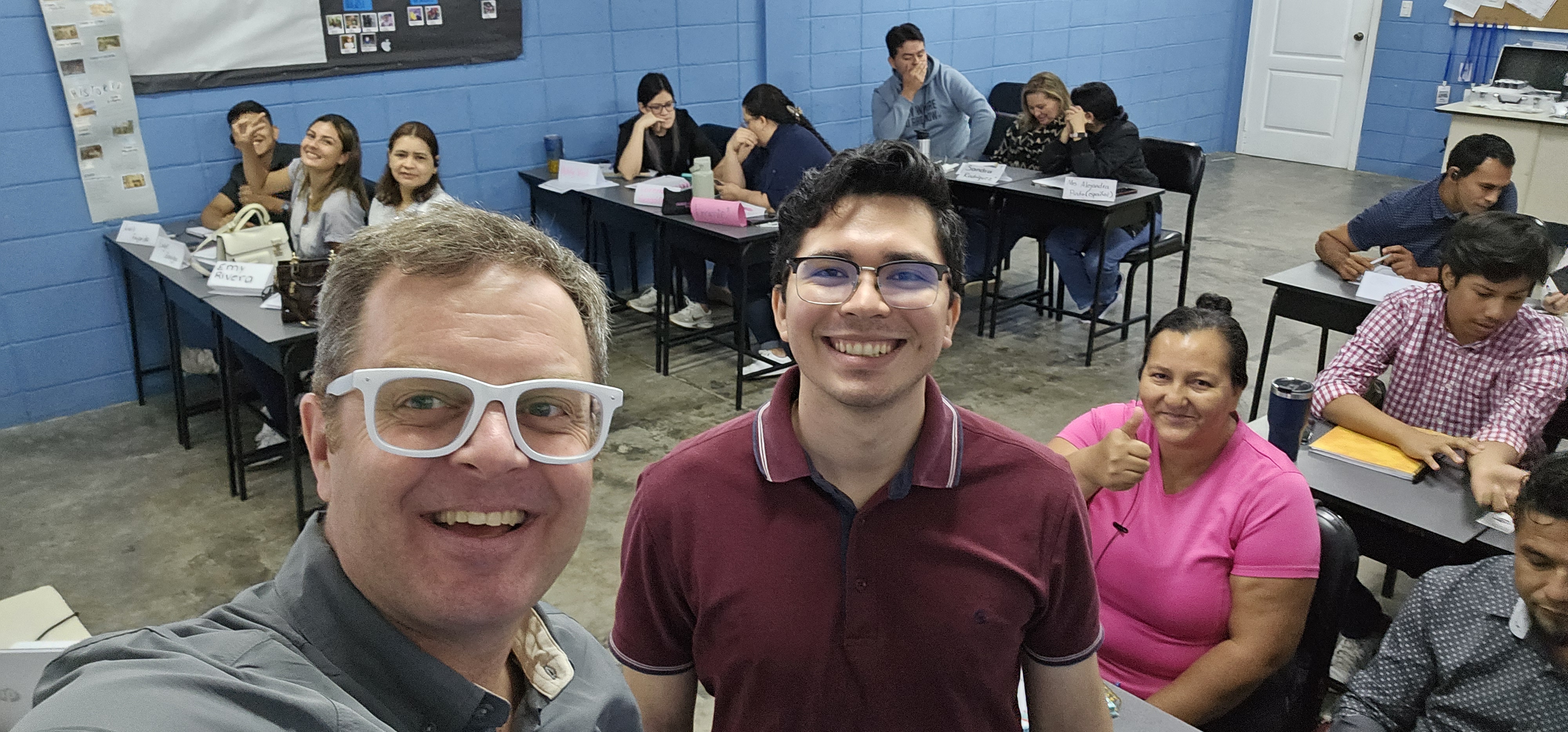
    As I reflect on our recently concluded 2025 Honduras Education Conference at Gran Comission Academy in San Pedro Sula, I am struck by the profound impact that emerges when educators gather with shared purpose. What began as a workshop series evolved into something far more meaningful—a community of practice bound by mutual commitment to educational excellence.

    The conference theme, “Effective Solutions in the Classroom,” served as more than just a title; it became our collective mission. Over three intensive days, my colleagues Renee Foisy Kleiner, Laura Shippee, and I had the privilege of working alongside 55 dedicated educators representing three different schools. The commitment of these teachers was exemplified by one group who traveled 3.5 hours each way to participate—a testament to their dedication to their craft and their students.

    Responsive Design: Meeting Educators Where They Are

    What made this conference particularly effective was our approach to design. Rather than imposing a pre-packaged curriculum, we worked closely with our hosts to develop a responsive program addressing the specific needs of Honduran classrooms. This collaborative approach ensured that our sessions on Design Thinking, Mobile Learning, Positive Behavior Management, Classroom Organization, and Digital Resources resonated with local educational contexts.

    The educators’ enthusiasm was palpable as they engaged with these frameworks not as abstract concepts, but as practical tools they could implement immediately. I observed countless moments of recognition as teachers connected new ideas with their existing practice, creating that essential bridge between theory and application.

    From Group Learning to Individualized Growth

    Perhaps the most transformative aspect of our program was the transition from group workshops to one-on-one coaching on our final day. This personalized approach allowed us to address specific challenges teachers were facing in their unique classroom environments.

    Walking through classrooms, meeting students, and witnessing the educational environment firsthand brought a richness to our discussions that wouldn’t have been possible otherwise. These coaching sessions evolved into collaborative problem-solving, with teachers bringing their contextual expertise and we offering methodological insights.

    What struck me most was how quickly these sessions transcended the traditional consultant-teacher dynamic. Instead, they became genuine exchanges between professionals united by a shared commitment to student success. The teachers’ openness to vulnerability—sharing both challenges and aspirations—created space for authentic growth.

    Sustainable Impact Beyond Conference Days

    As educational consultants, we often grapple with questions of sustainability: What happens after we leave? Will these new approaches take root? The eagerness of Honduran educators to maintain ongoing connections offers hope for lasting impact.

    This conference reinforced my belief that the most effective professional development is not about one-time knowledge transfer, but about building relationships that sustain continuous improvement. When teachers expressed their desire to continue our professional journey together, I recognized that we had succeeded in fostering something more valuable than content delivery—we had helped cultivate a community of practice that will continue evolving long after our departure.

    Cultural Exchange as Professional Development

    While our primary purpose was to share educational strategies, I found myself learning as much as I was teaching. The resourcefulness, creativity, and dedication of Honduran educators offered powerful lessons about doing more with less and maintaining unwavering commitment despite challenges.

    These cross-cultural exchanges remind us that educational excellence takes different forms across contexts. The innovative adaptations these teachers have developed to address local needs demonstrate that best practices emerge from diverse settings, not just from educational research centers in wealthy nations.

    Looking Forward: Seeds Planted for Future Growth

    As I return home, I carry with me images of engaged teachers brainstorming solutions, of classrooms transformed into more effective learning environments, and of students who will benefit from their teachers’ enhanced practice. The seeds planted during these three days will continue growing through the dedicated work of these remarkable educators.

    Our conference theme—”Effective Solutions in the Classroom”—was realized not through prescription but through partnership. By working together across cultures and contexts, we strengthened education in Honduras “one classroom at a time,” while simultaneously enriching our own understanding of what effective education truly means.

    The journey continues, the connections remain, and the impact expands through the daily work of teachers committed to creating better futures for their students.


    Interested in seeing what’s next and perhaps how you might join or support a future teacher conference like this? Subscribe to my website feed.

  • 📢 New Podcast Launch!

    🎧 WanderlustEDU 🎧

    💡 This podcast challenges educators and policymakers to embrace change, fostering a culture of innovation beyond technology. Explore cutting-edge methods, theories, and policies that transform classrooms into launchpads for adventure. Join our conversation to cultivate a mindset of continual learning and turn challenges into opportunities for growth.

    ✨ In full transparency, I want to share that this podcast is based on my work (cited in the show notes) and amplified by AI Podcasters (from Google NotebookLM) to generate an audio overview. I recognize this seems like an odd way to podcast, but I hope you will give it a try… you will likely be as surprised as I was at how engaging the podcasters are!

    I trust that this podcast makes my work approachable and accessible to a larger audience. Thank you for giving it a try… looking forward to your feedback!

    https://podcasters.spotify.com/pod/show/wanderlustedu/

  • Innovation and AI in Education

    A conversation about navigating the evolving landscape of education and work, a human-centered approach to integrating AI, fostering global awareness, and equipping students with future-ready skills is paramount. By addressing the ethical considerations, leveraging AI’s potential strategically, and continually adapting our understanding of essential skills, we can prepare students to thrive in a rapidly changing world.


    Note: This conversation was created by using Google NotebookLM and 5 original sources to generate a podcast feel.

    NOTE: cover image created with Adobe Firefly. Prompt: create a image about the future of education

    Full Conversation References:

    • Akerson, V. L., Burgess, A., Gerber, A., Guo, M., Khan, T. A., & Newman, S. (2018). Disentangling the meaning of STEM: Implications for science education and science teacher education. Journal of Science Teacher Education, 29(1), 1–8. https://doi.org/10.1080/1046560X.2018.1435063
    • Bybee, R. W. (2013). The case for STEM education: Challenges and opportunities. National Science Teachers Association.
    • Carpenter, E., Regassa, L. B., & Watson, C. L. (2020, January 24). Accelerating discovery: Educating the future STEM Workforce | NSF – National Science Foundation. Nsf.gov. Retrieved December 14, 2020, from https://www.nsf.gov/funding/pgm_summ.jsp?pims_id=505552
    • Collins, A. (2006). Cognitive apprenticeship. In R. K. Sawyer (Ed.), The Cambridge handbook of the learning sciences (pp. 47–60). Cambridge University Press.
    • Collins, A., Brown, J. S., & Newman, S. E. (1989). Cognitive apprenticeship: Teaching the crafts of reading, writing, and mathematics. In L. B. Resnick (Ed.), Knowing, learning, and instruction: Essays in honor of Robert Glaser (pp. 453–494). Erlbaum.
    • Cuban, L. (1986). Teachers and machines: The classroom use of technology since 1920. Teachers College Press.
    • Engeström, Y. (1987). Learning by expanding: An activity-theoretical approach to developmental research. Orienta-Konsultit. Retrieved from http://lchc.ucsd.edu/mca/Paper/Engestrom/Learning-by-Expanding.pdf
    • Freeman, B., Marginson, S., & Tytler, R. (2019). An international view of STEM education. In Globalisation and STEM Education (pp. 349–371). Brill Sense. https://doi.org/10.1163/9789004405400_019
    • Frick, K. T. (2017). The cost of the technological sublime: Daring ingenuity and the new San Francisco-Oakland Bay Bridge.
    • Haviland, W. A., Prins, H. E. L., Walrath, D., & McBride, B. (2005). Cultural anthropology: The human challenge.
    • Lahav, R. (1973). Futurology and education: Four futurologists and their theories of education. The Journal of Educational Thought (JET) / Revue De La Pensée Éducative, 7(1), 48–64. https://www.jstor.org/stable/pdf/23768782.pdf
    • Lindzon, J. (2018, July 18). This is what work will look like in 2100. Fast Company. https://www.fastcompany.com/90180181/this-is-what-work-will-look-like-in-2100
    • Lubinsky, J., & Shippee, M. (2021). Esports and strategic organizational adoption of innovation. In S. Andrews & C. Crawford (Eds.), Pathways and Opportunities Into the Business of Esports. IGI Global.
    • Mautz, S. (2018, April 23). What job skill is most lacking in the U.S.? LinkedIn CEO Jeff Weiner has a surprising answer. Inc.com. https://www.inc.com/scott-mautz/linkedin-ceo-jeff-weiner-just-revealed-employees-lack-this-1-surprising-job-skill-more-than-any-other.html
    • Merrill, D. M. (2002). First principles of instruction. Educational Technology Research and Development, 50(3), 43–59. https://doi.org/10.1007/BF02505024
    • Muhammad Anshari, & Hamdan, M. (2022). Understanding knowledge management and upskilling in fourth industrial revolution: Transformational shift and SECI model. VINE Journal of Information and Knowledge Management Systems, 52(4), 625–640. https://doi.org/10.1108/vjikms-09-2021-0203
    • National Academy of Sciences, National Academy of Engineering, & Institute of Medicine of the National Academies. (2007). Rising above the gathering storm: Energizing and employing America for a brighter economic future. National Academies Press.
    • National Education Association. (2010). Preparing 21st century students for a global society: An educator’s guide to the “Four Cs”. https://dl.icdst.org/pdfs/files3/0d3e72e9b873e0ef2ed780bf53a347b4.pdf
    • Ormrod, J. (2019). Human learning (8th ed.). Pearson.
    • Popkewitz, T. (1984). Paradigm and ideology in educational research: The social functions of the intellectual. Falmer Press.
    • Rogers, E. M. (2003). Diffusion of innovations (5th ed.). Free Press.
    • Roxby, P. (2015, May 17). Why an iron fish can make you stronger. BBC News. https://www.bbc.com/news/health-32749629
    • Schwab, K. (2016, January 14). The Fourth Industrial Revolution: what it means and how to respond. World Economic Forum. https://www.weforum.org/agenda/2016/01/the-fourth-industrial-revolution-what-it-me ans-and-how-to-respond/
    • Shippee, M. (2016). mLearning in the organizational innovation process [Doctoral dissertation, Syracuse University]. https://surface.syr.edu/etd/452
    • Shippee, M. (2019). WanderlustEDU: An educator’s guide to innovation, change, and adventure. Dave Burgess Consulting, Inc.
    • Shippee, M. (2020). No brainer AI in the classroom. Teach Magazine, September/October 2020.
    • Shippee, M. (2021). A globalized curriculum: The next evolution of education. In Mobile Learning 2021 and Educational Technologies 2021. IADIS Press. https://doi.org/10.34190/ml.21.001
    • Stohlman, M., Moore, T. J., & Roehrig, G. H. (2012). Considerations for teaching integrated STEM education. Journal of Pre-College Engineering Education Research, 2(1), 28–34. https://doi.org/10.5703/1288284314636
    • The Glossary of Education Reform. (2013, December 3). Hidden curriculum definition. Retrieved December 14, 2020, from https://www.edglossary.org/hidden-curriculum/
    • Toffler, A. (1970). Future shock. Random House.
    • United Nations. (2020, December 11). THE 17 GOALS | Sustainable Development. Sdgs.un.org. Retrieved December 14, 2020, from https://sdgs.un.org/goals
    • Van Doren, C. (1992). A history of knowledge: Past, present, and future. Ballantine Books.
    • What is Human-Computer Interaction (HCI)? (2016, June 6). The Interaction Design Foundation; Interaction Design Foundation. https://www.interaction-design.org/literature/topics/human-computer-interaction
    • Yin, R. K. (2003). Case study research: Design and methods (3rd ed.). Sage Publications, Inc.
  • AI and the rise of Editors: Refocusing Educational Assessment in preparing our learners for their future

    Assessing knowledge and skill acquisition has been a top priority in every form of education from early philosophers questioning their audience, to master craftsman coaching their apprentices, to today’s formalized education systems. As we know, the industrial revolution had a profound impact on the later driving for summative, or end-product, deliverables to demonstrate mastery. This focus treats the learners as a product themselves, that is, a worker crafted to deliver predefined end results. Here was industry’s attempt at creating a viable workforce (societal demand) during what we might call the first three industrial revolution eras, yet now we are in a fourth (see image). (1,2)

    In our fourth industrial revolution era our workforce needs have dramatically shifted, a shift which should inform our educational assessment practices. Here we find our workforce co-collaborating with technology as end-results are produced. The new skills for this workforce are significantly more process than product oriented, demanding a formative assessment focus on the learning process to help foster critical thinking and a growth mindset (3). The end result will prepare our learners to be Editors of products rather than widget/cog focused assembly line workers thinking solely on the product in front of them. The fourth industrial revolution will lead to the rise of editors, are we ready?


    Sources
    1. Zaman, R. (2020, July 15). Unfolding Fourth Industrial Revolution – THE WAVES. THE WAVES. https://lnkd.in/ejyASN2D
    2. Shippee, M. (2023, December 22). Beyond the 4C’s: Framing our Understanding of Future Skills in the era of the Fourth Industrial Revolution. https://lnkd.in/e28Ck2Zc
    3. Shippee, M. (2023, November 30). AI in Education: a focus on pedagogy. https://lnkd.in/eV3xT4-s

  • Dropping AI: Seeking our Pencil Moment for AI in education

    aiEducation?

    aiLearning?

    aiLesson?

    aiTool?

    aiSchool?

    What will it take for AI to become so fully adopted that it is an unnamed part of our routine? Will AI have its Pencil Moment?

    At some point over 100 years ago teachers were saying “Today we are going to learn math with our pencils.” Math WITH our pencils? Would we have it any other way today? 

    It is fascinating to think of a classical school tool, the pencil, as being an innovation and spoken about as independent of the normal learning process: learning with a pencil. But at some point we dropped the “with a pencil” part of the statement and now we simply say “Today we are going to learn math” (so to speak)… we do not need to include naming the pencil, the innovation, which became part of our routine in learning. Each innovation, if meaningfully adopted, is destined to have a Pencil Moment.

    Think about it: the real power in an innovation is not in naming it, rather, it is in not having to name it at all! OR that it becomes the Kleenex-brand, a brand originating product name (for facial tissues). How can this be the case? A Pencil Moment occurs when an innovation not only solves a problem (the WHAT) but it does so effectively because it is powered by its relation to the WHY (a question of practice).

    The post-pandemic education prefix of choice is AI. As they say “There is nothing new under the sun” decades ago, with the advent of the Internet, we were excited to add an “i” in front of product names or solutions seeking to attach our efforts to the latest and greatest tech. Now, with the ubiquity of the Internet the power of that little “i” is fleeting. This is an excellent example of the adoption of innovation as it relates to our popular naming conventions.

    There are 5 steps to the adoption of innovation in education:

    1. First we discover the innovation and try it within our existing learning efforts
    2. If we see value in enhancing our practice we use it more regularly and with more users
    3. When we have decided the innovation is worthy of widespread use we integrate the innovation in order to Learn WITH it.
    4. To achieve full adoption we then establish best practices and coach/train others to leverage a new best practice where the innovation is integral.
    5. Full adoption is achieved when we stop naming the innovation as an integrated tool and it becomes a critical part of our teaching routine.

    (for more see the Fusion Model) Note: An innovation can include, but is not solely equated to, technology. An innovation can be a shift in practice as well.


    Sources

    Engeström, Y. (1987). Learning by Expanding: An activity-theoretical approach to developmental research. Helsinki: Orienta-Konsultit. Retrieved from http://lchc.ucsd.edu/mca/Paper/Engestrom/Learning-by-Expanding.pdf

    Rogers, E.M. (2003). Diffusion of innovations (5th ed.). New York: Free Press.

    Shippee, Micah (2016) “mLearning in the organizational innovation process.” Dissertation. https://surface.syr.edu/etd/452. Note: In this original work, The Fusion Model is generically titled “Activity in the organizational innovation process.” 

    Shippee, M. (2019) WanderlustEDU: An Educator’s Guide to Innovation, Change, and Adventure. San Diego: Dave Burgess Consulting, Inc.

  • Beyond the 4C’s: Framing our Understanding of Future Skills in the era of the Fourth Industrial Revolution

    In 2002, the National Education Association (NEA) formed the Partnership for 21st Century Skills (P21). P21 developed the “Framework for 21st Century Learning,” which highlighted 18 essential skills for learning in the 21st century. However, it became evident that 18 skills were too broad, so in 2004, the “Four Cs” were introduced: Critical Thinking, Communication, Collaboration, and Creativity and Innovation.(1,2) 2004, as a frame of reference, that was when Facebook was launched.  Needless to say our society has changed dramatically since then, now 20 years later we must revisit our understanding for what our students need for the next 20 years and beyond.

    One way of framing our reflection is through the context of industrial revolution eras. These eras strive to organize the historical processes of change from an agrarian and handicraft economy to one dominated by industry and machine manufacturing and beyond (3). The changes innovations have brought to us have introduced novel ways of working and living and fundamentally transformed our society. We an loosely define these eras as (4):

    EraCenturyRealization
    First18th CenturyMechanization: Steam, Water, Mechanical production equipment
    Second19th centuryMass Production: Division of Labor, Electricity, Mass Production, Assembly Line
    Third20th CenturyAutomation: Electronics, Computers, Automated Production
    Fourth21st CenturyIOT and AI: Cyber-physical systems

    We now find ourselves well into the 4th industrial revolution (4IR) characterized by the convergence of digital, biological, and physical technologies, which is creating new opportunities and challenges for businesses and society. One of the most significant impacts of 4IR is the rise of artificial intelligence (AI). AI is already being used in a variety of ways, from automating tasks to powering self-driving cars. As AI continues to develop, it will have an even greater impact on our lives and work. How then do we begin to reframe our thinking about education? 

    While our teaching and learning environments are changing, our motivation to prepare students for a successful future remains steadfast. Our perspective on the knowledge and skills required for success will become more clear as we struggle through necessary iterations of our thinking. Knowledge for example, as framed by curriculum, must increasingly be more globalized in its objectives and less hyper-focused on regional needs. 

    The very nature of an educational curriculum is to serve as a dynamic, iterative cultural artifact. Historically, educational curricular shifts have gone from Socratic dialogue, to expert-apprentice programs, to humanities enrichment, to STEM focus, each with varying degrees of equitable access. Gaps in equity have led to economic-driven curricular designs (ex. STEM/STEAM). With ever increasing access to learning we must refocus our curricular priorities to address the needs of our global society. With this in mind we need a globalized curriculum that is culturally responsive and iterative in nature seeking the good of humanity over governmental initiatives. (5)

    What are the skills of the future workplace? How are we to prepare our students now in 4IR? As discussed, we often talk about future-ready skills as related to the 4C’s 

    • Communication
    • Collaboration
    • Critical Thinking
    • Creativity

    4IR skill demand requires an unpacking and reframing of these skills to appear more focused on (6):

    • Upskilling: becoming an expert in changing with new demands is a critical skill for our future.
    • Intuitive Decision Making: retaining the human-ness in decision making as a form of auditing AI output.
    • Rational Decision Making: when leveraging AI support in decision making, we must be prepared to ask: Does that data really lead to that conclusion logically? Is this how we humans operate?
    • Collaborative Innovation: Peer to Peer as well as Human to AI. Our capacity to work with other human beings to solve problems and understand every diverse perspective is critical. Furtherm, it is critical that our learners are prepared to collaboration with AI and future innovation. We can find help in this area from our understanding of Human Computer Interaction (HCI) research in the design and the use of computer technology, which focuses on the interfaces between people (users) and computers. Including, but not limited to,: Human-Centered Artificial Intelligence: Human-robot interaction, Explainable AI, Interactive Machine Learning, Responsible AI, Multimedia retrieval and understanding, Recommender Systems (7)
    • Societal Systems: While an AI might direct us to a more effective and efficient societal structure (from an algorithmic perspective) we must pause and leverage both the intuitive and rational decision making that is uniquely human, to assess whether these recommendations are truly what is best for our society asking: Is this how people really want to live? Have we retained our sense of community? Belongingness… a trait not computationally logical.

    The conversation about knowledge and skill development is never settled, nor should it be. We must continually ask questions about the status quo and challenge ourselves to prepare our learners for a successful future.


    Also published: Shippee, Micah, Beyond the 4c’S: Framing Our Understanding of Future Skills in the Era of the Fourth Industrial Revolution (January 11, 2024). Available at SSRN: https://ssrn.com/abstract=4692130 or http://dx.doi.org/10.2139/ssrn.4692130

    And:

    Shippee, Micah. (2024, January 2). Skills and Knowledge in the 4th Industrial Revolution: A Focus on AI in Education – K12 Digest. K12 Digest. https://www.k12digest.com/skills-and-knowledge-in-the-4th-industrial-revolution-a-focus-on-ai-in-education/

    ‌


    Sources

    1. BenBassett, D.. (2016). Linkedin.com. https://www.linkedin.com/pulse/connecting-4cs-21st-century-education-5th-c-deanna-zaucha/
    2. ‌National Education Association (2010). Preparing 21st Century Students for a Global Society: An Educator’s Guide to the “Four Cs”. https://dl.icdst.org/pdfs/files3/0d3e72e9b873e0ef2ed780bf53a347b4.pdf
    3. Industrial Revolution | Definition, History, Dates, Summary, & Facts | Britannica Money. (2023). In Encyclopædia Britannica. https://www.britannica.com/money/topic/Industrial-Revolution
    4. Schwab, K., & World Economic Forum. (2016, January 14). The Fourth Industrial Revolution: what it means and how to respond. World Economic Forum. https://www.weforum.org/agenda/2016/01/the-fourth-industrial-revolution-what-it-means-and-how-to-respond/
    5. Shippee, M. (2021) A Globalized Curriculum: The Next Evolution Of Education. International Conferences Mobile Learning 2021 (ML 2021) and Educational Technologies 2021 (ICEduTech 2021) ISBN: 978-989-8704-28-3
    6. ‌Muhammad Anshari, & Hamdan, M. (2022). Understanding knowledge management and upskilling in Fourth Industrial Revolution: transformational shift and SECI model. VINE Journal of Information and Knowledge Management Systems. https://doi.org/10.1108/vjikms-09-2021-0203
    7. What is Human-Computer Interaction (HCI)? (2016, June 6). The Interaction Design Foundation; Interaction Design Foundation. https://www.interaction-design.org/literature/topics/human-computer-interaction
  • AI in Education: a focus on pedagogy

    Introduction

    AI is here to stay. The promise of streamlined workflows, a shorter workweek, and overall convenience in our daily lives has solidified AI’s place in our world. In education, we strive to backwards design curriculum and the codification of necessary skills from the future world our students will find themselves in. Preparing our students for their future is the critical focus of education and has always been our North Star.

    Assessment

    The growth of AI tools is both challenging the processes by which we engage our students and providing opportunities to effectively and efficiently scale well-established instructional practice (pedagogy). Instructional assessment processes, that is, how we measure knowledge and skill acquisition, have always been a central component of education. Traditionally, educators have worked to balance summative assessment and formative assessment.

    The goal of summative assessment is to evaluate student learning at the end of instruction, often leveraging pre-existing benchmarks. This is an end-product, rather than process focused, area of assessment. What does this matter for AI? One example that illustrates AI’s relevance is if the summative assessment in a class is a take-home essay, can an educator truly trust who, or what, is doing the work? When responses were copy/pasted off of a website educators learned how to flag the work but AI tools are increasingly unique responses that are challenging to identify for authenticity.

    The exciting contribution AI brings to assessment is in the formative assessment realm. Here the goal is to monitor ongoing student learning and to provide meaningful feedback. It is difficult for an individual educator to give this type of ongoing feedback consistently for large groups of students. AI can be a powerful tool to personalize learning for students with rapid, in-the-moment feedback to nurture their comprehension during their learning process.

    Instruction

    AI, like all technology, is an amplifier, in an educational setting, AI amplifies both good practice and strategies that need improvement. The Apprenticeship Model, at it’s core, is arguably the most natural, effective form of teaching and learning, and has remained amongst modern humankind’s greatest scalability challenges.  We have filled auditoriums with eager learners, designed self-paced courses, and explored countless feedback systems, all to replicate the painfully obvious: a human touch in learning is incredibly powerful but horribly unscalable. Here an expert works individually with a learner to model, guide, provide feedback, challenge, and validate the learners progress. 

    Although apprenticeship can differ widely from one context to another, they typically have some or all of the following features1:

    • MODELING – the educator carries out the task, simultaneously thinking aloud about the process, while the learner observes and listens.
    • COACHING – as the learner performs the task, the educator gives frequent suggestions, hints, and feedback.
    • SCAFFOLDING – the educator provides various forms of support for the learner, perhaps by simplifying the task, breaking it into smaller and more manageable components, or providing less complicated equipment.
    • ARTICULATION – the learner explains what they are doing and why, allowing the educator to examine the learner’s knowledge, reasoning, and problem-solving strategies. 
    • REFLECTION – the educator asks the learner to compare their performance with that of experts, or perhaps with an ideal model of how the task should be done.
    • INCREASING COMPLEXITY AND DIVERSITY OF TASKS – as the learner gains greater proficiency, the educator presents more complex, challenging, and varied tasks to complete. 
    • EXPLORATION – the educator encourages the learner to frame questions and problems on their own, and in doing so to expand and refine acquired skills.

    While this tried and true method of learning is effective in a 1:1 scenario, it has historically proven a challenge to scale to a larger student audience. AI has the potential to make the apprenticeship model a highly effective pedagogical practice. The ai-apprenticeship model finds the educator MODELING a task for their students (while explaining their thought process) then directing their students to a self-guided, AI-powered, series of tasks which are responsively-enabled to appropriately challenge the learner to achieve expertise (COACHING, SCAFFOLDING, ARTICULATION, REFLECTION, and INCREASING COMPLEXITY AND DIVERSITY OF TASKS). The educator has been enabled to work 1:1 with students requiring support beyond what the AI is offering. Finally, with developments in AI students now have a new set of tools that they can use to produce AI generative products, via question prompts, that represent their content-area expertise (EXPLORATION).The entire time an authentic discourse is imperative to humanize the process with front of classroom check-ins and student led summary dialogue.

    Further, we are hearing of innovative educators modeling AI applications through transparent examples with their students, identifying the pros and cons of the technology as it exists today. The modeling approach, where the educator speaks openly about how they use AI, and even explain their reservations, is a life-skill lesson on having grit, or agency, to persevere in overcoming a new challenge. By demonstrating a level of stick-to-it-tiveness that we all need in life, educators are using AI as a use case that has provided opportunities for their students to have clear access to the skill of agency in action.

    Safety and Security

    AI is not a replacement for teachers. Teachers are essential for providing students with the guidance and support that they need to succeed. AI can be a valuable tool for teachers, helping them scale good practice and effectively reach more students. But we need to proceed with care when deploying emergent technologies into schools, here we are appropriately hyper-sensitive on how these technologies will impact our students. Regarding AI, the pedagogy will get worked out, teachers are masters of change, that’s not to undermine the significance of the instructional shift, but it can be done. The challenge we need to resolve is centered on safety and security. Data privacy is a fundamental concern that has to be resolved and better understood. Learners need to ask questions, work through problems, and create less than perfect solutions, all of which are not meant for the public stage, their privacy matters and must be protected.

    Change is uncomfortable and sometimes scary but change whether forced (ex. COVID teaching), or by choice, has the potential to guide us to make the world a better place for our children.


    Also published: Shippee, Micah, AI in Education: a focus on pedagogy (November 30, 2023). SSRN: https://ssrn.com/abstract=4649752 or http://dx.doi.org/10.2139/ssrn.4649752


    Sources

    • Collins, A. (2006). Cognitive apprenticeship. In R.K. Sawyer (ed.), The Cambridge handbook of the learning sciences (pp. 47-60). Cambridge, England: Cambridge University Press.
    • Collins, A., Brown, J.S., & Newman, S.E. (1989). Cognitive apprenticeship: Teaching the crafts of reading, writing, and mathematics. In L.B. Resnick (Ed.), Knowing, learning, and instruction: Essays in honor of Robert Glaser (pp. 453-494). Hillsdale, NJ: Erlbaum
    • Ormrod, J. (2019). Human learning (8th ed.). Upper Saddle River, NJ: Pearson.

Search the blog

Past posts

October 2026
M T W T F S S
 1234
567891011
12131415161718
19202122232425
262728293031