Blog

  • The Intentionality Imperative

    The Intentionality Imperative

    The Intentionality Imperative is the non-negotiable obligation to ensure that all innovation, adoption, and systemic design are guided by purposeful, outcome-driven human agency rather than passive momentum. In modern education and organizational change, it asserts that technology, platforms, and automated workflows must never be treated as self-justifying ends. Instead, leaders and practitioners have an urgent duty to deliberately align tools with human-centered values, pedagogical goals, and measurable outcomes before, during, and after implementation.

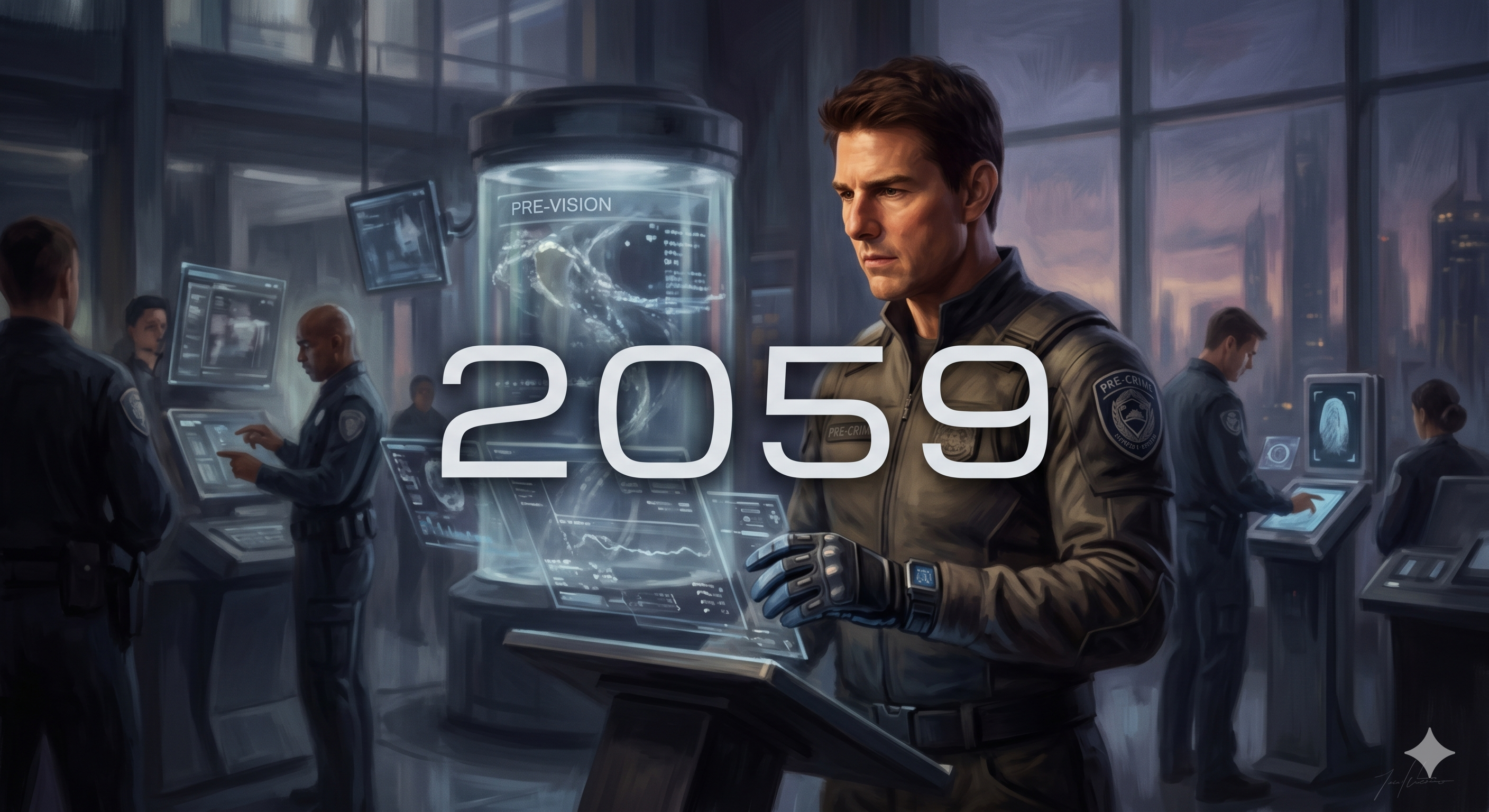
    As we look toward the future outlined in 2059: The Future of Education, navigating the intersection of technological advancement and human potential requires intentionality. Two recent milestones in educational policy and research highlight this shift: the U.S. Department of Education’s policy letter on education technology and screen time (Baesler, 2026) and a bibliometric study mapping the paradigm of Education 5.0 (Aşiroğlu, 2026). Both underscore a central truth: technology cannot simply be deployed; it must be purposeful, ethical, and centered on human flourishing.

    Moving Beyond Screen Time to Instructional Purpose

    Debates surrounding digital learning often fixate on raw exposure—the number of hours spent in front of a screen. Yet, the U.S. Department of Education highlights that recreational screen use and intentional educational technology serve entirely distinct functions. The primary question is whether the digital tools placed before learners strengthen pedagogy, expand opportunity, and produce measurable growth.

    This marks a shift beyond practice shaped by the 4th industrial revolution from passive digitization toward systems designed to augment human potential. When educational environments utilize adaptive engines or interactive platforms, the value is not found in the hardware itself, but in the instructional outcomes it unlocks.

    The Human-Centered Core: From Tools to Ecosystems

    A central theme in both sources is that technology should remain a tool in service of learning, never an end in itself.

    • Pedagogy Over Novelty: Digital platforms and artificial intelligence must be educator-led, transparent, and grounded in sound instructional goals.
    • Personalization and Equity: Intelligent systems allow educators to differentiate instruction, support students with disabilities through assistive tools, and bridge geographic boundaries.
    • Ethical Foresight: As technological integration deepens, maintaining data privacy, algorithmic transparency, and human oversight of AI decisions is essential.

    Bridging the Implementation Gap

    Envisioning educational futures is only the first step; closing the gap between vision and classroom practice demands intentional change management. As Aşiroğlu (2026) points out, the primary hurdles facing modern educational innovation are teacher readiness, institutional infrastructure, and policy alignment.

    The U.S. Department of Education echoes this by emphasizing that success requires shared accountability among policymakers, educators, and technology providers. Educational leaders must invest in professional learning and continuous outcome evaluation to ensure tools serve teachers and students effectively. As we build toward the horizon of 2059, the intentionality imperative reminds us that true innovation is not defined by how many screens we introduce, but by how thoughtfully we place human capability at the center of the learning journey.

    References

    Shippee, M. (2025). 2059: The Future of Education. https://amzn.to/4xj52ej

    Aşiroğlu, S. (2026). Mapping the intellectual structure and emerging themes of Education 5.0: A bibliometric and abstract-based thematic analysis. European Journal of Educational Research, 15(4), 1291–1304. https://doi.org/10.12973/eu-jer.15.4.1291

    Baesler, K. (2026). Dear Colleague Letter: Guidance on education technology and screen time in schools. Office of Elementary and Secondary Education, U.S. Department of Education. https://www.ed.gov/about/news/press-release/us-department-of-education-releases-guidance-responsible-use-of-education-technology-classroom


    Thank you for joining me on this journey as Education-Futurists. Our efforts to think forward and prepare for a positive educational future is critical in shaping what comes next.

    Please let me know how I can serve you more… Contact: Micah

    Ready to lead change with intention? The Fusion Model offers a research-based framework for adopting innovation, and Micah leads keynotes and workshops that put it to work for your team.

  • 2059 and the Post-Scarcity Scholar: Reclaiming the Soul of the Classroom

    2059 and the Post-Scarcity Scholar: Reclaiming the Soul of the Classroom

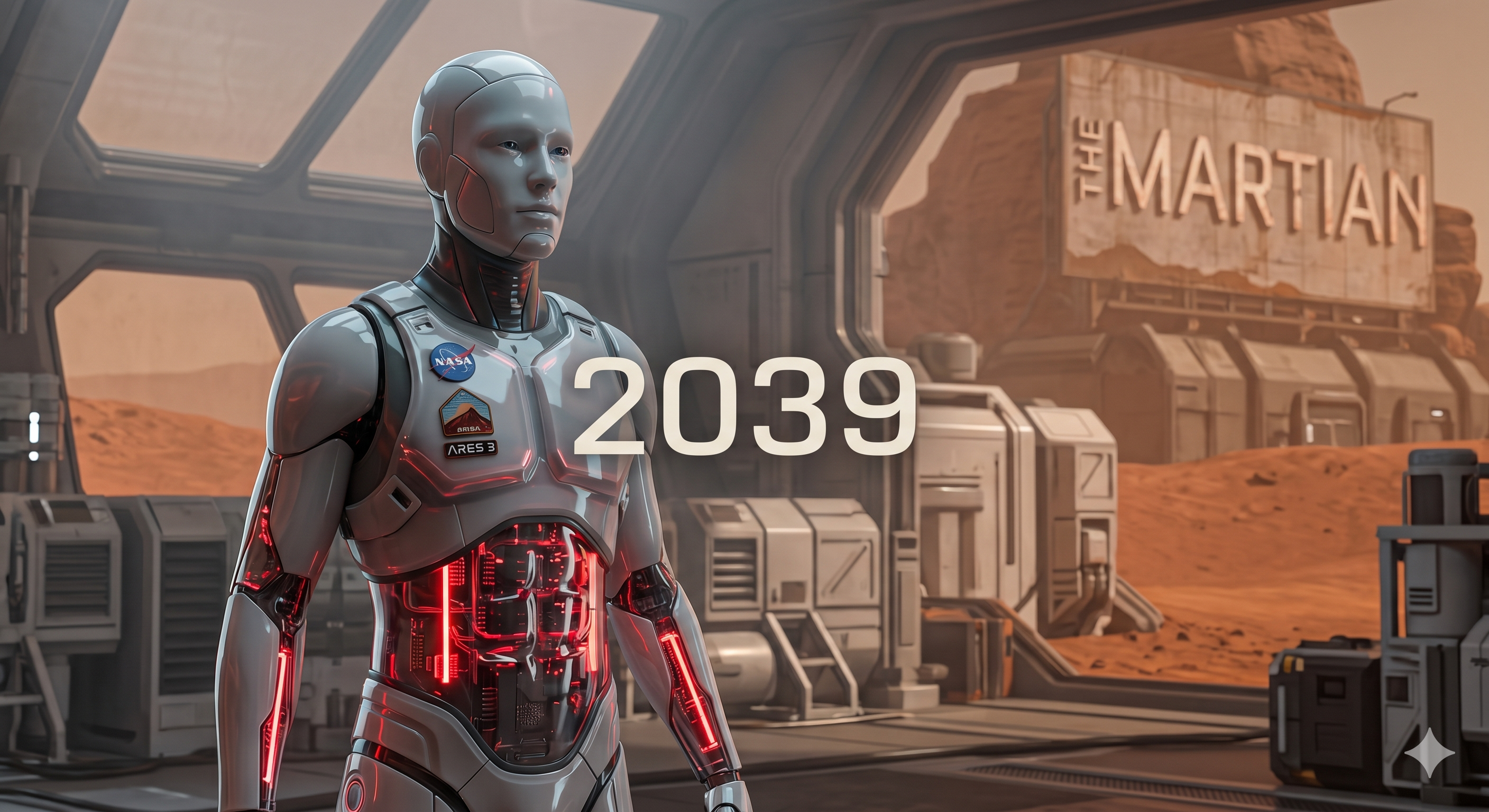
    Checking-in On The Future: The book 2059 is a glimpse into the future of education. Published in 2025 and looking ahead into 2029, 2039, 2049, and 2059, the book outlines an attainable future for education driven not only advancements in technology but also through intentional, pedagogy and organizational preparedness. This 4-part blog series is a check-in on the future presented by the book. NOTE: As a self-proclaimed Sci-Fi nerd, I have added imagery closely related to the future dates presented in each blog. Can you name the movie(s)?

    The final horizon of my book, 2059, envisions a world of Post-Scarcity. In this scenario, universal access to all human knowledge is a reality, and AI tutors provide personalized instruction at zero cost. This forces a fundamental question that we are already grappling with in 2026: What is the purpose of education when machines handle the cognitive labor?

    In 2026, we are seeing a “Trophic Cascade” in education. As we integrate ambient AI (see AI’s Pencil Moment), we are realizing that the human teacher is the soul of the classroom, the Keystone Species of the educational ecosystem. AI is handling the repetitive feedback loops, but it is the human educator who provides the “narrative-driven glue” that gives learning its meaning.

    The 2026 Check-In: Progress toward the 2059 horizon is measured today by our focus on Access to Agency. We are moving away from “Peak Bagging”—checking tasks off a list—toward “Wanderlusting,” where the goal is human fulfillment and creative exploration (see WanderlustEDU). As I wrote in 2059, the furthest horizon is not about technology; it is about being extremely good at being humans. Our 2026 mission is to reach that “Pencil Moment” where technology amplifies the soul of the classroom without ever replacing the irreplaceable human connection.


    Thank you for joining me on this journey as Education-Futurists. Our efforts to think forward and prepare for a positive educational future is critical in shaping what comes next.

    Please let me know how I can serve you more… Contact: Micah

    This essay explores one of the four waypoints on the journey to 2059, from 2059: The Future of Education. Read the complete guide to the future of education, explore the book, or bring Micah to your school or conference to get your team thinking, talking, and preparing.

  • 2059 Book Talk: Reflections from My Evening at Of Moose and Mind Bookshop

    2059 Book Talk: Reflections from My Evening at Of Moose and Mind Bookshop

    ….📚 What a great evening at Of Moose and Mind! I had the pleasure of sharing a reading from my book, 2059: The Future of Education, and talking about what the future of learning might look like. Thank you to everyone who came out, listened, asked thoughtful questions, and joined me in imagining what education could become. It was a wonderful conversation and an inspiring evening. 🎓✨

    What an incredible experience we had gathering at Of Moose and Mind Bookshop in Manlius, NY! I had the pleasure of sharing readings from my book 2059: The Future of Education, and opening up a candid dialogue with fellow educators, readers, and community members about where learning is headed over the coming decades.

    Highlights from Our Conversation

    Shifting from Reactive to Intentional Tech Adoption: We explored how easy it is to fall into fear, uncertainty, and doubt (FUD) when new tools emerge. Instead of simply reacting to each wave of technology, we discussed how we can proactively shape our learning environments with human needs at the very center.

     Valuing the Messy Process Over the Polished Product: Through personal stories—from my own kids’ creative efforts with AI to the accidental invention of the potato chip—we talked about the critical difference between generating an instant answer and doing the hard cognitive work. While AI can produce polished results in seconds, our real growth happens in the messy, human struggle of the journey.

    Remembering That “You Cannot Be Replaced”: I shared an excerpt from the book examining ecological trophic cascades, using the reintroduction of wolves in Yellowstone to reflect on the interconnectedness of our schools. We discussed how educators are the heartbeat of the educational ecosystem, creating ripple effects of safety, connection, and growth that no machine can replicate.

    Prioritizing Durable Skills, Motivation, and Agency: With access to raw information becoming nearly frictionless, we dug into what matters most for our learners: building resilience, fostering intrinsic motivation, supporting mental health, and cultivating enduring life skills.

    A heartfelt thank you to Ana Morley, author liason, and the entire Of Moose and Mind family for hosting us, and to everyone who joined our conversation, challenged ideas, and shared their own stories. Together, we are imagining—and building—a brighter future for learning..


    Thank you for joining me on this journey as Education-Futurists. Our efforts to think forward and prepare for a positive educational future is critical in shaping what comes next.

    Please let me know how I can serve you more… Contact: Micah

  • 2049 and the Community Learning Hub: Dismantling the Silos in the 4th Industrial Revolution (4IR)

    2049 and the Community Learning Hub: Dismantling the Silos in the 4th Industrial Revolution (4IR)

    Checking-in On The Future: The book 2059 is a glimpse into the future of education. Published in 2025 and looking ahead into 2029, 2039, 2049, and 2059, the book outlines an attainable future for education driven not only advancements in technology but also through intentional, pedagogy and organizational preparedness. This 4-part blog series is a check-in on the future presented by the book. NOTE: As a self-proclaimed Sci-Fi nerd, I have added imagery closely related to the future dates presented in each blog. Can you name the movie(s)?

    My prediction for 2049 was a total restructuring of the educational system: the end of the traditional school building and the birth of the Community Learning Hub . These hubs represent a shift from age-based cohorts to Competency-Based Progression, integrated deeply with local communities.

    In 2026, the “Matthew Scenario” from my dissertation (from 2016) — a learner using mobile portals to overcome electrical grid limitations—has become the blueprint for the global workforce. We are currently in the midst of a Workforce Transformation where 40% of workers are independent contractors, a topic I have been exploring for over a decade as both researcher and practitioner. This “Gig Economy” is the catalyst that will eventually turn our schools into the decentralized hubs of 2049.

    The 2026 Check-In: We are progressing toward this future by breaking down the First and Second Industrial Revolution-focused instructional silos and seeing an increasingly globalized curriculum evolve. In 2026, we are seeing the Rise of Editors. Students are no longer treated as “widgets” but as CURATORS of synthetic content. The “return on instruction” (ROI) in our current projects—leveraging partnerships with local industry—is laying the foundation for 2049’s decentralized reality. Our task today is to ensure students have the Soft Skills—empathy and collaboration—that will be a critical currency when knowledge is ubiquitous.


    Thank you for joining me on this journey as Education-Futurists. Our efforts to think forward and prepare for a positive educational future is critical in shaping what comes next.

    Please let me know how I can serve you more… Contact: Micah

    This essay explores one of the four waypoints on the journey to 2059, from 2059: The Future of Education. Read the complete guide to the future of education, explore the book, or bring Micah to your school or conference to get your team thinking, talking, and preparing.

  • 2039 and the Bio-Integrated Learner: Navigating the Frontier of Cognitive Liberty

    2039 and the Bio-Integrated Learner: Navigating the Frontier of Cognitive Liberty

    Checking-in On The Future: The book 2059 is a glimpse into the future of education. Published in 2025 and looking ahead into 2029, 2039, 2049, and 2059, the book outlines an attainable future for education driven not only advancements in technology but also through intentional, pedagogy and organizational preparedness. This 4-part blog series is a check-in on the future presented by the book. NOTE: As a self-proclaimed Sci-Fi nerd, I have added imagery closely related to the future dates presented in each blog. Can you name the movie(s)?

    The second decade explored in 2059—the era of the Bio-Integrated Learner—is beginning to send its first ripples through our 2026 classrooms. In my book, I envisioned 2039 as the point where neural implants for knowledge acquisition would trigger a radical shift in how we handle assessment. 

    In 2026, we have moved from sci-fi demos to a neurotechnology market projected to hit $24 billion by next year. We are seeing tangible steps in this direction already with wearables, specifically, AR glasses that offer fast, in-the-moment access to nearly all information. In-ear EEG devices are being leveraged to track cognitive readiness scores in professional settings. Beyond that true Brain Computer Interfaces are becoming a reality. The ethical debate I predicted for the 2030s regarding Cognitive Enhancement is starting now, in our legislative sessions.

    The 2026 Check-In: As states begin enacting “neural data rights” legislation, we are seeing the first frameworks for what  we explore in 2059 classroom’s Post Scarcity Scholar setting. If a 2039 student can “download” a language, what does that mean for our 2026 testing models? We must realize that traditional memory-based testing is a “failed success metric.” Our 2026 priority must be to cultivate critical thinking and authentic editing of AI content, teaching students to collaborate with and stress-test these emerging tools and neural interfaces rather than simply fearing them.


    Thank you for joining me on this journey as Education-Futurists. Our efforts to think forward and prepare for a positive educational future is critical in shaping what comes next.

    Please let me know how I can serve you more… Contact: Micah

    This essay explores one of the four waypoints on the journey to 2059, from 2059: The Future of Education. Read the complete guide to the future of education, explore the book, or bring Micah to your school or conference to get your team thinking, talking, and preparing.

  • 2029 and the Hyper-Connected Horizon: Are We Reaching the “Pencil Moment” for AI?

    2029 and the Hyper-Connected Horizon: Are We Reaching the “Pencil Moment” for AI?

    Checking-in On The Future: The book 2059 is a glimpse into the future of education. Published in 2025 and looking ahead into 2029, 2039, 2049, and 2059, the book outlines an attainable future for education driven not only advancements in technology but also through intentional, pedagogy and organizational preparedness. This 4-part blog series is a check-in on the future presented by the book. NOTE: As a self-proclaimed Sci-Fi nerd, I have added imagery closely related to the future dates presented in each blog. Can you name the movie(s)?

    As we stand in early 2026, the “Hyper-Connected Classroom” I predicted for 2029 is no longer a distant vision; it is our current reality. In the book 2059, I described 2029 as the era where AI-driven personalized learning and global virtual classrooms would become standard. Today, we are witnessing the Clarifying stage of the Fusion Model in real-time where we are preparing for an AI-driven future.

    The most exciting signal of 2026 is the move toward what I call the Pencil Moment for AI. Just as we stopped saying we were “writing with a pencil” a century ago and simply said we were “writing,” we are beginning to drop the “AI” prefix from our learning activities. We are navigating a permanent environmental shift from “managing a tool” to “navigating an atmosphere.”

    The 2026 Check-In: We are currently rediscovering the power of the Apprenticeship Model. While we once struggled to scale 1:1 human mentorship, AI is now filling the “middle part” of that model—providing the responsive scaffolding and feedback that allows the human educator to more effectively function as the “Guide on the Side” where and when it will be most meaningful in the learner’s journey. However, the 2029 prediction of total connectivity still faces the hurdle of Routinized Adoption. For schools the mission for the next three years is clear: we must move beyond the “Hype Cycle” and ensure that our hyper-connectivity does not come at the cost of student data privacy.


    Thank you for joining me on this journey as Education-Futurists. Our efforts to think forward and prepare for a positive educational future is critical in shaping what comes next.

    Please let me know how I can serve you more… Contact: Micah

    This essay explores one of the four waypoints on the journey to 2059, from 2059: The Future of Education. Read the complete guide to the future of education, explore the book, or bring Micah to your school or conference to get your team thinking, talking, and preparing.

  • What Retro Tech and Old Skills Teaches Us About the Future of Education

    What Retro Tech and Old Skills Teaches Us About the Future of Education

    As we have explored in past blog posts, human performance can be understood through four essential dimensions: knowledge, skills, environment, and motivation. When all four grow in a positive direction, success follows. It seems simple, yet the relationship among these elements is far more dynamic than it appears.

    Consider learning to ride a bicycle. You can watch countless videos, interview avid cyclists, and read manuals about balance and momentum. That gives you knowledge. You can ride on a flat, well-paved path with clear signage. That is your environment. You may feel deeply motivated—perhaps for health, recreation, or the sheer thrill of movement. But until you actually get on the bicycle and wobble your way forward, you do not yet have the skill.

    Skills are fundamentally different. They require action, practice, failure, and persistence. As we look toward a future where knowledge becomes more accessible and environments continue to improve through technology and infrastructure, the real opportunity—and challenge—will center on skill development and fostering motivation (through emphasis on agency).

    Skills That Fade and Skills That Endure

    The funny thing about skills is that some become obsolete without warning. Many of us mastered abilities that no longer matter.

    For example, I was once an expert at cleaning the head of a VCR with an alcohol swab when “tracking” adjustments failed to clear the fuzzy lines on a VHS tape. At the time, that felt like a real skill, I was an AV Superhero… today, it is meaningless.

    We all have stories like this. The pager that once made us feel important. The mix of fragile floppy disks on which we saved everything. The cassette ribbons tangled in the car stereo. The dial-up modem that forced us to choose between using the phone or using the Internet. These were the competencies of their day, but their usefulness faded as the world evolved.

    Yet other skills are evergreen—durative skills that retain value even as the tools around them change.

    The Evergreen Art of the Mixtape

    Take the mixtape. Some of us poured hours into crafting the perfect soundtrack for someone we cared about. We listened, rewound, recorded, trimmed, and timed each track with precision. But the skill was never about pushing the right buttons on a boombox. The skill was curation—selecting songs that expressed meaning, emotion, and intention.

    When we moved from cassette tapes to CDs, the tools improved, but the underlying skill did not change. We were still choosing, arranging, and personalizing a collection of songs.

    Now in the era of cloud-based streaming platforms, we can build playlists collaboratively and share them instantly. The interface is different. The skill is not. The heart of the work—thoughtful curation—remains evergreen.

    This is the future of education. Technologies evolve, formats shift, interfaces modernize, but many of the core principles of great teaching endure.

    What Evergreen Skills Mean for the Future of Education

    As we imagine the learning landscape of 2059 and beyond, this is the essential question:

    How can innovation amplify what we know already works?

    If a technology amplifies the skills that matter—creativity, curation, problem solving, collaboration, reflection—then it deserves a place in our practice. But if it only adds novelty without substance, it is simply another tool destined to fade like the VCR head cleaner or the tangled cassette tape.

    The future will reward the same evergreen skills that have always defined powerful learning. Our job is to identify them, nurture them, and use new technologies to extend their reach.

    Because whether we are crafting playlists, riding bicycles, or preparing students for an unknown future, skills are what truly endure.

  • The Curriculum We Never Wrote—and Why Teacher–Student Engagement Will Define The Future of Education

    The Curriculum We Never Wrote—and Why Teacher–Student Engagement Will Define The Future of Education

    When we imagine the future of education, we often picture new tools, new spaces, and new possibilities. Artificial intelligence supporting learners in real time; Personalized pathways that adapt to each student; Classrooms that look and feel very different from those of the past.

    These images are exciting—and they should be. But as I explore in 2059, the future of education will not be shaped by technology alone. It will be shaped by something far more enduring and deeply human: the relationships between teachers and students.
    Beneath every lesson plan and learning platform exists a quieter force at work—one that has always shaped learning and will matter even more in the decades ahead. It is sometimes called the unwritten or hidden curriculum: the lessons students learn not from what we say, but from how we engage with them.

    The Unwritten Curriculum Is a Relationship Story

    Every classroom teaches two curricula at the same time.
    One is written—standards, objectives, content, assessments. The other is unwritten, communicated through daily interactions. Through tone, trust, feedback, and expectations, students learn powerful lessons about learning itself:

    • Is curiosity welcomed here?
    • Is struggle a normal part of growth?
    • Is my thinking valued, even when it is unfinished?
    • Am I seen as capable?

    These lessons are rarely formalized, yet they shape motivation, confidence, and agency in profound ways. And they are transmitted primarily through teacher–student engagement.
    In this sense, the unwritten curriculum is not something abstract or hidden away in policy. It lives in relationships. It is carried through conversations, coaching moments, and shared problem-solving. It is how students come to understand who they are as learners.

    Why Engagement Matters More in a High-Tech Future

    By the late 2020s and 2030s, learning environments will be richly supported by intelligent systems. AI will help personalize content, surface patterns, and extend learning beyond traditional boundaries. Access to information will be nearly universal. Paradoxically, this makes teacher–student engagement more important, not less.

    As technology takes on more routine instructional tasks, the role of the teacher shifts even further toward what humans do best: mentoring, sense-making, ethical reasoning, encouragement, and connection. Students will not simply need answers. They will need guidance in deciding which questions matter.

    The unwritten curriculum will increasingly be shaped by how teachers help students navigate complexity, ambiguity, and choice. Engagement becomes less about delivering information and more about co-constructing meaning.

    Engagement as the Engine of Skill Development

    In 2059, I argue that skills—not knowledge—become the primary focus of education in a world where information is abundant. But skills are not downloaded. They are developed through practice, reflection, and feedback over time.

    Teacher–student engagement is the environment in which this development occurs.
    Skills such as critical thinking, collaboration, ethical judgment, and creative problem-solving flourish when students feel safe to test ideas, revise thinking, and learn from mistakes. Teachers play a central role in signaling that learning is a process, not a performance.
    When engagement is strong, students are more willing to:

    • Take intellectual risks
    • Ask better questions
    • Persist through challenges
    • Reflect honestly on their growth

    These are precisely the capacities learners will need as they collaborate with AI and operate in rapidly changing systems.

    Motivation Grows Where Students Feel Seen

    One of the most hopeful insights in education is that motivation is not fixed—it is responsive. Students are more motivated when they believe their effort matters and their growth is recognized (Agency). The unwritten curriculum shapes this belief daily.

    Through engaged relationships, teachers communicate that learning is not about compliance or perfection, but about progress. Students begin to see themselves as active participants in their own development.

    In the framework I outline in 2059, human performance emerges from the interaction of knowledge, skills, environment, and motivation. Teacher–student engagement sits at the intersection of environment and motivation. It is how learning becomes personal, meaningful, and sustainable.

    A Future Where Teachers Become Learning Architects

    Looking toward 2059, the most exciting shift is not the replacement of teachers, but their elevation. As content delivery becomes increasingly automated, teachers are freed to focus on higher-order engagement:

    • Coaching rather than covering
    • Guiding reflection rather than grading compliance
    • Designing experiences rather than managing tasks


    In this future, the unwritten curriculum becomes more intentional. Teachers are not only aware of the messages their engagement sends—they use them deliberately to cultivate agency, confidence, and purpose.
    Students learn, implicitly and explicitly, that learning is something they do with others, not something done to them.

    Rewriting the Unwritten—Already in Progress

    The most encouraging truth is that this future is not hypothetical. It is already visible in classrooms where teachers:

    • Invite student voice
    • Model curiosity
    • Normalize revision and reflection
    • Build trust through consistency and care

    These educators are already shaping the unwritten curriculum in ways that align with the future envisioned in 2059. They are proving that engagement scales—not through force, but through culture.

    The future of education will not be defined by a single innovation or reform. It will be shaped by millions of daily interactions between teachers and students—each one reinforcing what learning means and who learners can become.

    The Most Important Curriculum of the Future

    By 2059: The Future of Education, I discuss how technological innovation will be extraordinary. Access to knowledge will be assumed. What will distinguish learners is not what they know, but how they think, adapt, and act with purpose. Those capacities grow in relationship. The most important curriculum of the future is not written in policy documents or programmed into platforms. It is written in the quality of teacher–student engagement—day after day, conversation by conversation. If we invest there, the future of education is not something to fear… the future is what we build—together.

  • What We Get Wrong About Technology in Education: The Myth of Determinism

    What We Get Wrong About Technology in Education: The Myth of Determinism

    Conversations about the future of education often carry an unspoken assumption: that technology itself drives change.

    • If we adopt the right platform, learning will improve.
    • If we deploy AI, personalization will follow.
    • If we put devices in students’ hands, outcomes will rise.

    This belief has a name: determinism.

    And while it is appealing, it is one of the most persistent—and limiting—myths in educational technology.

    What determinism looks like in edtech

    In the context of education, determinism is the assumption that technology inherently produces predictable educational outcomes, regardless of how people use it or the context in which it is deployed.

    Determinism shows up in familiar statements:

    • “This tool will transform instruction.”
    • “AI will close achievement gaps.”
    • “Data dashboards improve decision-making.”
    • “One-to-one devices revolutionize classrooms.”

    Each of these claims assumes a direct, linear relationship between technology and learning. But education has never worked that way.

    Why determinism is so tempting

    Determinism persists because it simplifies complexity. For leaders, it offers clarity: invest here, progress follows. For edtech organizations, it supports bold claims and scalability. For systems under pressure, it promises efficiency and certainty. In a world of rapid change, determinism feels reassuring. It suggests that the future can be installed. But learning is not software, and schools are not closed systems.

    Education is not deterministic by nature

    Education is deeply human.

    Learning is shaped by:

    • Teacher judgment
    • Pedagogical intent
    • Relationships
    • Culture
    • Motivation
    • Context

    The same tool used in two different classrooms will almost always produce two different outcomes—not because the technology changed, but because the people and conditions did. Teachers adapt. Students reinterpret. Schools constrain or enable. Meaning is negotiated, not delivered.

    Technology does not cause change. People do.

    The danger of deterministic thinking

    When we adopt deterministic thinking, several things happen:

    • We mistake adoption for impact
    • We undervalue professional expertise
    • We blame teachers when tools underperform
    • We oversimplify complex learning challenges
    • We design for scale instead of context

    Most importantly, we risk eroding teacher agency—the very thing that makes innovation possible.

    A more accurate lens: technology as a mediator

    A more honest way to understand edtech is through a human-centered, non-deterministic lens.

    In this view:

    • Technology is a mediating artifact, not a driver
    • Outcomes are emergent, not guaranteed
    • Pedagogy shapes tools more than tools shape pedagogy
    • Integration is social, cultural, and iterative

    This is why “best-in-class” tools sometimes fail—and why modest tools, thoughtfully used, can thrive.

    Why this matters even more in the age of AI

    AI has reintroduced determinism with new intensity.

    We hear claims that AI will:

    • Automatically personalize learning
    • Replace instructional planning
    • Optimize assessment
    • Remove bias
    • Scale expertise

    But AI does not remove human judgment—it amplifies it.

    AI reflects the assumptions, values, and constraints of those who design and use it. Without intentional pedagogy, ethical framing, and professional discernment, AI risks accelerating existing problems rather than solving them.

    The future of education will not be automated. It will be augmented.

    Looking ahead to 2059

    In 2059, I argue that the future of education is not defined by smarter machines, but by more empowered humans.

    • Technology expands possibility.
    • Teachers provide meaning.
    • Students exercise agency.

    The most powerful innovations will not be the ones that promise certainty, but the ones that respect complexity and elevate professional judgment.

    When we move beyond determinism, we stop asking:

    “What will this tool do to education?”

    And we start asking:

    “What do we want education to become—and how can technology help us get there?”

    That shift makes all the difference.


    If this resonates, these ideas are explored more deeply in my book 2059: The Future of Education, where I examine how human-centered frameworks, thoughtful adoption, and agency-driven design can help us navigate change with clarity rather than fear.

    Ready to lead change with intention? The Fusion Model offers a research-based framework for adopting innovation, and Micah leads keynotes and workshops that put it to work for your team.

  • Innovation Without Intent: From Phone Bans to AI, Reclaiming the Soul of the Classroom

    Innovation Without Intent: From Phone Bans to AI, Reclaiming the Soul of the Classroom

    In March 2020, education systems around the world made a decision that felt inevitable at the time. When schools closed, we decided that technology would replace classrooms. Laptops became desks, platforms became pedagogy, and screens became the connective tissue of schooling. At the moment, it felt like a rescue mission. But years later, UNESCO would name it something else entirely: a tragedy.

    In their report An Ed-Tech Tragedy?, UNESCO documents exactly what happened when the world mistook technological capability for educational readiness. The result was not the transformation we were promised, but a distortion—of learning, equity, teacher agency, and the human purposes of schooling.

    Today, we stand at a similar crossroads. We face a quieter but equally revealing policy moment: the rapid global move to ban smartphones in schools. Simultaneously, we are rushing headlong into the adoption of Artificial Intelligence. These two trends—banning one technology while uncritically embracing another—might seem contradictory, but they are symptoms of the same underlying failure. We are letting the tools define the rules, rather than letting good teaching and learning practice lead the way.

    If we want to secure the future of education, we must stop confusing decisiveness with wisdom. The adoption of innovation, whether it is a mobile device or a Large Language Model, must be done with thoughtfulness and intentionality. We must build a system where technology amplifies the teacher, rather than displacing them. Or else we fulfill Bill Gates techno-prophetic utterance: “AI will replace teachers within 10 years” severely damaging the naturally human practice of both teaching and learning.

    The Pendulum Swings: What Phone Bans Reveal

    Unlike the pandemic-era mandates for educational survival that forced screens in front of students, the current wave of phone bans is framed as a corrective—a return to focus, attention, and deep learning. And this time, at least, policymakers are pointing to research.

    There is growing empirical evidence that restricting smartphone use can improve educational outcomes. A quasi-experimental study of Florida school districts by economists David Figlio and Umut Özek found that after an initial adjustment period, student test scores improved and unexcused absences declined. Similarly, research from England by Beland and Murphy found improvements in standardized test performance following bans, particularly for lower-achieving students.

    Cognitive science supports these policy shifts. Controlled experiments consistently show that the mere presence of a device, along with its constant stream of notifications, fragments attention and reduces cognitive performance even when the device is not in use.

    However, the evidence is not unanimous. A large peer-reviewed study across 30 UK secondary schools found no measurable improvement in grades or well-being from bans alone. This suggests that while removing the distraction helps, it is not a silver bullet. The “ban” is a blunt instrument. It addresses the symptom—distraction—but it does not solve the deeper problem of how we govern the relationship between human attention and digital tools.

    The risk today is not that phone bans are misguided. The risk is that we treat them as a solution rather than a signal. If we are not more cautious, what’s next? Banning 1:1 devices? They are individual screens after all leading to screen time. If we simply ban the “bad” tech (phones) while rushing to adopt the “new” tech (AI) without a deeper strategy, we are destined to repeat the mistakes of 2020.

    The AI Rush: Repeating the Mistake?

    While we lock phones in magnetic pouches, Artificial Intelligence is quietly embedding itself into every layer of the education system—from classroom tools and learning platforms to workforce analytics.

    In 2021, UNESCO released AI and Education: Guidance for Policy-Makers, a landmark report issuing a sober warning: AI adoption in education has outpaced evidence, policy, and ethical guardrails. Five years later, the insight remains pragmatic and echoes the lessons of the pandemic: technology that arrives before we are “ready” for it often does more harm than good. The insight of 2021 has evolved into a moral imperative in the 2025 report “UNESCO’s AI and the Future of Education: Disruptions, dilemmas and directions” which concluded that we must stop confusing technological capability with educational progress. It argues that the gap between technological adoption and educational readiness has not just persisted—it has widened into a “historical rupture.”

    But we need to define “readiness” correctly. True readiness is not about bandwidth, software licenses, or how many chatbots we can deploy per district. It is about ensuring that innovation serves the biological necessity of social learning. We must ask the fundamental question: Does this technology amplify the teacher, or displace them?.

    The Biological Case for the Teacher

    The cost of ignoring the human element in favor of technological efficiency is not hypothetical; it is already visible in the data. In a recent address to C-SPAN, cognitive neuroscientist Dr. Jared Cooney Horvath highlighted a disturbing trend: for the first time in modern history, the current generation (Gen Z) is underperforming their parents on cognitive measures ranging from literacy to IQ.

    Horvath grounds this claim in three distinct data sets that should serve as a wake-up call for every educator and policymaker:

    • The Reversal of the Flynn Effect: The long-standing historical trend of rising IQs has broken. Gen Z is scoring lower on attention, memory, and executive function.
    • International PISA Data: Across 80 countries, data shows that students using computers for 5+ hours a day in school significantly underperform compared to those with low-tech usage.
    • US NAEP Scores: State-level “one-to-one” device adoption often correlates with a plateau or drop in National Assessment of Educational Progress scores.

    This data validates what every great educator knows intuitively: learning is a social process. When we pause and acknowledge that learning is not just knowledge acquisition rather it is the successful, ethical, and meaningful application of knowledge, we understand that human beings learn best from other human beings, not devices. The “teacher presence” is not a nostalgic nice-to-have; it is the biological mechanism of cognitive development. When we prioritize efficiency over this human connection, we do not just lose the “soul” of the classroom; we break the mechanism of learning itself.

    Governing Change: The Fusion Model

    As someone who taught middle school in New York State before, during, and immediately after the COVID-19 school closures, I lived the consequences of unexamined policy firsthand. I saw technology sustain some students while leaving others behind. I saw teachers adapt heroically, only to burn out under the weight of tools that demanded more than they supported.

    That experience pushed me back into my academic roots—change management, diffusion of innovation, and Activity Theory. Together, these frameworks point to a singular conclusion: Systems fail not because tools are bad, but because adoption ignores context, readiness, and human activity.

    The future of education will not be decided by banning phones or adopting AI. It will be decided by how thoughtfully systems learn to govern change.

    This is the core premise of the Fusion Model, which I unpack in my book 2059: The Future of Education. The model argues that we cannot surrender to the tool, redefining education to suit the technology. Instead, we must navigate the adoption of innovation with purpose. We need a framework where technology is the engine, but human connection remains the steering wheel.

    Conclusion: Moving Forward with Intentionality

    The phone bans we see today are not the story; they are a test. They are a test of whether education has learned to move forward with humility, evidence, and human-centered design—or whether it will continue to mistake urgency for insight.

    UNESCO’s An Ed-Tech Tragedy? ensures we do not forget what went wrong in 2020. 2059: The Future of Education exists to ensure we do not repeat it.

    We must adopt AI and other emerging tools not just efficiently, but ethically—ensuring they protect and amplify the critical presence of the teacher. If we can do that, we will not just be banning distractions or buying software; we will be building a future where innovation finally fulfills its promise to education.

    Ready to lead change with intention? The Fusion Model offers a research-based framework for adopting innovation, and Micah leads keynotes and workshops that put it to work for your team.


    References

    • Beland, L.-P., & Murphy, R. (2016). Ill communication: Technology, distraction & student performance. Labour Economics, 41, 61–76.
    • Figlio, D., & Özek, U. (2023). The effects of banning cell phones in schools (Working paper). National Bureau of Economic Research.
    • Horvath, J. C. (2025, January 15). Doctor on How Screen Time Hurts Kids’ Cognitive Development [Video]. C-SPAN. https://youtu.be/Fd-_VDYit3U?si=Hd2Qfxsi3yJZ97tJ
    • Lancet Regional Health – Europe. (2024). The impact of school smartphone policies on adolescent mental wellbeing and academic outcomes.
    • Miao, F., Holmes, W., Huang, R., & Zhang, H. (2021). AI and education: Guidance for policy-makers. UNESCO Publishing.
    • Shippee, M. (2025). 2059: The Future of Education. https://a.co/d/fKWBl2t
    • UNESCO. (2023). An Ed-Tech Tragedy? Educational technologies and school closures in the time of COVID-19. Paris: UNESCO.
    • AI and the future of education. Disruptions, dilemmas and directions. (2025). Unesco.org. https://www.unesco.org/en/articles/ai-and-future-education-disruptions-dilemmas-and-directions

Search the blog

Past posts

October 2026
M T W T F S S
 1234
567891011
12131415161718
19202122232425
262728293031