In WanderlustEDU, Dr. Micah Shippee explains how we can approach a future that is exciting but uncertain with “innovativeness,” or the ability to respond creatively to the unexpected. Using relevant research and practical experience, he explores principles of self-awareness and presents practical strategies to become agents of change.
Frame your perspective on the future of education
Understand your role in change
Recognize the relationship between innovation and emergent technology
The acronym STEM has seen popularity in education, software, and even in the toy market. This has led us to use “STEM” as a word-acronym, like GIF, AIDS, or SCUBA. STEM has been most often used in reference to educational program priorities.
A STEM-education focuses on Science, Technology, Engineering, and Math. The belief is that these will help prepare our learners to compete in their future economy. Many policymakers, economists, and futurists believe a solid foundation in STEM will make us more successful. In our increasingly globalized economy, the spread of products, technology, information, and jobs is occurring across national borders and cultures. This “globalization” has increased discussions about the relevance of STEM in education and how a STEM education leads learners to better understanding the interconnectedness of concepts and ideas.
History of STEM
For decades, in the United States, national policy documents have argued that our global competitiveness relies on students’ engagement in science, technology, engineering, and mathematics (STEM). In response to growing concerns about our future workforce, the term “STEM” was introduced in 2001 by the National Science Foundation (NSF). They stated: “A well-prepared, innovative science, technology, engineering, and mathematics (STEM) workforce is crucial to the Nation’s prosperity and security. Future generations of STEM professionals are a key sector of this workforce, especially in the critical scientific areas…To accelerate progress in these areas, the next generation of STEM professionals will need to master new knowledge and skills, collaborate across disciplines, and shape the future of the human-technology interface in the workplace.” STEM Critics argue it is a socially constructed label developed in response to economic and global pressure, yet one would ask: Isn’t that part of the role of education? To respond to changing times? After all, education is changing because the world is changing.
What does STEM education actually look like?
The directive for classroom teachers has been to reach an ambitious goal of increasing the number of students pursuing STEM-related careers. Perhaps a more realistic goal would be to continue the mantra of over a millenia of education, what some call “the hidden curriculum,” that is, to motivate learners to care about the future… an empathy-driven focus to cause positive change in our world.
We talk about STEM-related careers, we think about four distinct disciplines, yet in practice, the meaning and emphasis often only include one discipline: Science. Some, choose to put the onus solely on Science teachers arguing that they must have an understanding of what integrated STEM education is in order for the education system to be successful. Is this mission of STEM? Simply for science teachers to bear the burden of preparing students for their future?
The truth of the matter is that the actual educational meaning and practice of STEM is not clear. Do we approach all four as siloed curricular areas with distinct course objectives to be mastered? Or, do we instead break down the silos and leverage each of these areas around a central theme? I would argue the latter is where the most powerful learning potential is found. Rather than focus on the individual contents of Science, Technology, Engineering, and Mathematics learners will make the most meaning by leveraging them all together with a STEM-thinking approach to solving real world problems.
From a teaching and learning perspective we find supporting direction from the field of instructional design where we can prescribe effective teaching and learning practices. Among them are the work of Dr. M. David Merrill who describes 5 principles of instruction:
#1 Learning is promoted when learners are engaged in solving real-world problems.
#2 Learning is promoted when existing knowledge is activated as a foundation for new knowledge.
#3 Learning is promoted when new knowledge is demonstrated to the learner.
#4 Learning is promoted when new knowledge is applied by the learner.
#5 Learning is promoted when new knowledge is integrated into the learner’s world
These 5 principles explain the power of hands-on learning where each individual learner makes real meaning of the process. A problem/project approach which employs STEM-thinking, over siloed content understanding, will prepare learners for their future.
STEM-thinking is a set of skills that we can employ to identify important problems and questions in real-life situations. STEM-thinking supports our explanation of both the natural and designed world through evidence-based conclusions. STEM-thinking serves as a process of inquiry and an attitude that exhibits a willingness to engage in issues as a reflective citizen.
Meaningful adoption of STEM-thinking in education can positively impact learners when it is translated into policies, education programs, and practically applied in classrooms. STEM-thinking will lead to a prepared workforce that focuses on meaningful innovation.
Is there a global need for STEM education?
Free-trade economics of globalization aside, does STEM have potential to have a positive impact on our world? From a project/problem-based learning perspective… absolutely.
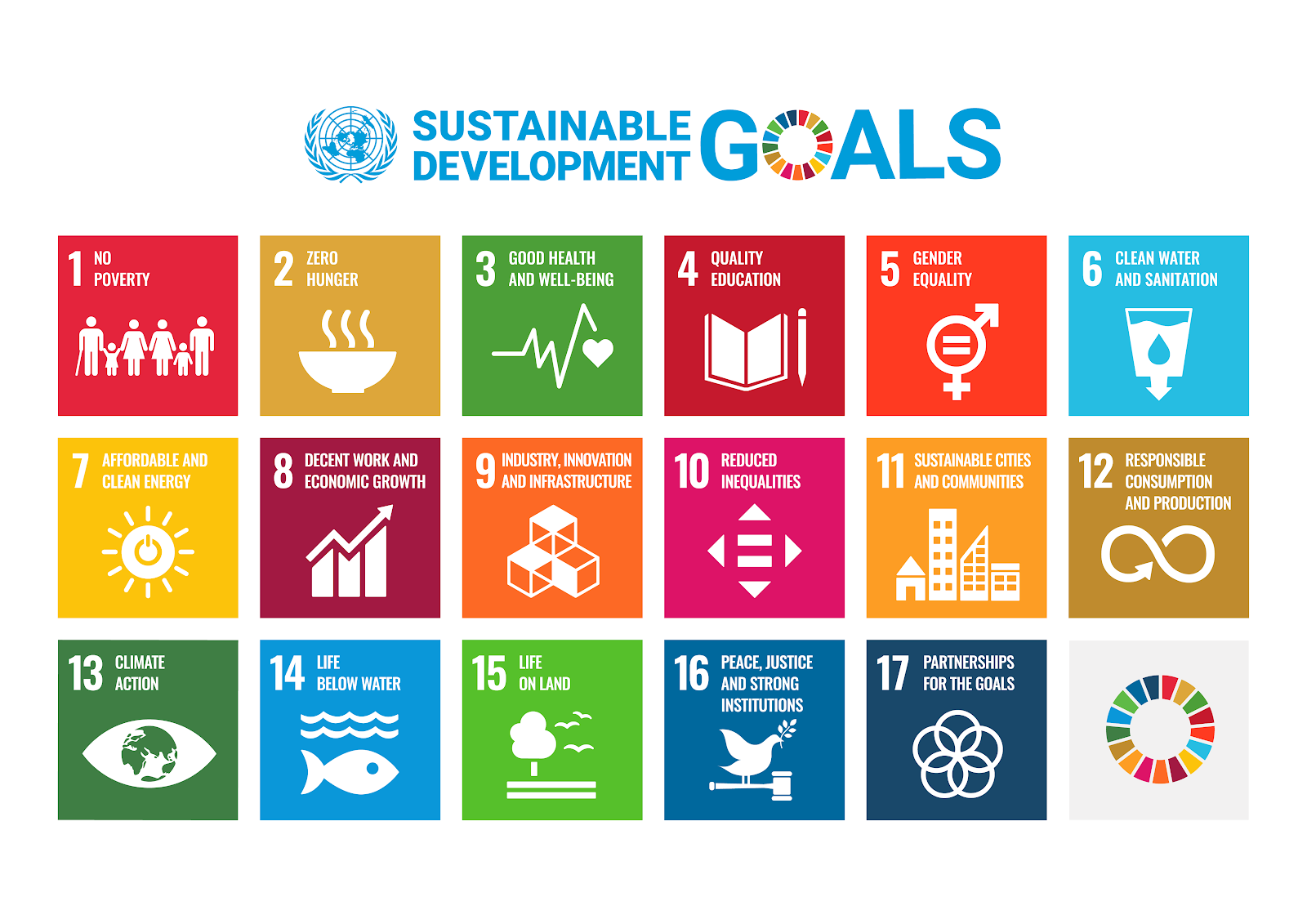
The United Nations (UN) Sustainable Development Goals (SDGs) describe where that impact needs to take place. The SDGs are an urgent call for action by all countries, developed and developing, to employ a global partnerships that recognize “ending poverty and other deprivations must go hand-in-hand with strategies that improve health and education, reduce inequality, and spur economic growth, all while tackling climate change and working to preserve our oceans and forests.”
The UN SDGs provide guidance for helping cultivate focus areas for our future citizens. We can help our learners understand and be ready to address them with a STEM-thinking skill set.
The global challenges we face are significant and will require more than academic thought. STEM-thinking in education must be part of our strategic response… more than simply tinkering with current policies and programs, or just updating science curriculums. STEM-thinking is about understanding the world from many viewpoints.
From a humanities perspective a STEM focus in education appears to tell only part of the story. Some argue for a modification to the acronym to complete the picture. Should we simply add letters to the acronym like “A” for “Arts” giving us STEAM or “R” for “Reading” and/or “Research” and thus STREAM? I would suggest that we instead accept “STEM” and propose that we frame the humanities (reading, writing, fine arts, history, social studies, etc…) as the glue that links the components of STEM together. Humanities, through context-driven accounts, and stories, explain and illustrate the meaningful application of STEM. For example, the science, technology, engineering, and math used to explain why an Archimedean Screw works is amplified by both the historical accounts of its development and the stories of modern use which illustrate how it works. Further, the humanities help us understand culture, a critical component when trying to help others adopt meaningful change.
One of my favorite stories embodying a STEM solution to a real world problem that only became effective when culture was understood, is Dr. Christopher Charles’ “Lucky Iron Fish.”
In 2008, a Masters student travelled to Cambodia for a research project. While there, he was shocked at the high rates of iron deficiency anemia and anemia in the region. He decided to dedicate his future research to developing a safe, and affordable solution.
The student was Christopher Charles, now Dr. Charles. He was inspired by previous research which showed that cooking in a cast iron pot increased the iron content in food. He developed an iron ingot that could be boiled in soups or drinking water. But not everyone was ready to throw a block of iron into their drinking water. It was clear that Dr. Charles had to better understand the culture in which he was working.
After doing more research on the culture, he realized what he needed to do in order to persuade people to use the ingot, Dr. Charles cast the ingot into the shape of a fish that was considered to be lucky in Cambodian folklore. As explained in his thesis “the concept of a lucky iron fish design did not pander to superstition, but created a cultural relevance for a solution based on science. To make the fish more attractive to the users, he gave the fish a smile. He called this prototype the “Happy Fish”. He went on to show that almost everyone used the fish and results from his research showed that regular use of the Happy Fish decreased anemia by 46%.
The Lucky Iron Fish story exemplifies an SDG, real world problem with a solution developed through a STEM-thinking lens that would have failed to make an impact if it was not for the humanities. Understanding culture is paramount in leading positive change.
Conclusion
What is STEM? We could simply say a focus on teaching science, technology, engineering, and mathematics. Perhaps we would be better off asking: What could STEM be? A STEM-thinking approach in education will help prepare our students for their future by preparing them with a set of skills that will help address the growing needs of our world. STEM is so much more than mastering a few courses in school.
Plenty of the contributing authors in this edition explore both the psychological theories and scientific understandings that DESCRIBE our learning. While the target audience of this edition was broad, I cannot help but review it from my lens as an educator. Some of the authors began to discuss Instructional Design (ID) Theories (although not always in name) and I believe it is worth diving deeper into these. ID, which bridges the gap between Learning Theory and Educational Practice, is a practical approach that PRESCRIBES learning and is built on the work of psychological-learning theories and scientific understanding. ID is best employed to help us effectively & efficiently build the bridge between Learner and Content.
One of the special edition contributing authors, Markham Heid, began to address this in his article “Harnessing a Universe of Knowledge” where he explored “Learning: The Necessary Ingredients.” Here he developed important ID understandings like attentiveness to learner motivation as foundational in learning. But we should go further…. There are many more powerful ID theories and principles that can prescribe effective learning practices for educators. Among them are the work of Dr. M. David Merrill in First Principles of Instruction(2). Merrill describes 5 principles of instruction:
#1 Learning is promoted when learners are engaged in solving real-world problems.
#2 Learning is promoted when existing knowledge is activated as a foundation for new knowledge.
#3 Learning is promoted when new knowledge is demonstrated to the learner.
#4 Learning is promoted when new knowledge is applied by the learner.
#5 Learning is promoted when new knowledge is integrated into the learner’s world
I am grateful that Time chose to focus this special edition around Learning. I hope both these contributions and current events illicit more dialogue and ACTION to support positive change in education.
I have been using Google Meet for meetings, teaching &/or remote learning but have found many missing participants in my with my larger groups. I discovered a quick pro-tip I thought I would share that allows us to see more participants.
On your laptop/PC use ZOOM tools to reveal more learners! Press 1. Command (Mac) OR Control (non-Macs) 2. -/+ (zoom out/in)
Every good idea needs someone willing to carry it forward. In WanderlustEDU, Dr. Micah Shippee explores how educators navigate change through four attributes — Motivation, Environment, Skills, and Knowledge — and how understanding your own relationship with change is the first step toward growing it.
From the pages of WanderlustEDU
What Kind of Adopter Are You?
Take the Adopter Quiz below to see which of Rogers’ five adopter categories best describes you, based on your choices.
WanderlustEDU
What Kind of Adopter Are You?
Every good idea needs someone willing to carry it forward. WanderlustEDU explores how educators navigate change — take this 6-question audit to find your adopter type.
Your Adopter Profile Is Ready!
Where should we send your full WanderlustEDU growth guide and future updates on innovation and change?
Please fill in your name and a valid email.
You'll also join Micah's email list for occasional updates on innovation and change in education. Unsubscribe anytime.
Privacy: when you take this quiz, your name and email are saved along with your results. I may occasionally follow up about my writing, speaking, and services. Your information is never sold or shared with others for their marketing, and you can ask to be removed at any time.
Whatever your type, WanderlustEDU makes the case that every adopter category has value — the work is learning to recognize your own pattern, and growing the attribute that will carry you furthest.
New: explore the Fusion Model interactively. Move the lens through each adoption stage and see the guiding questions for every part of the activity system on the Fusion Model page.
Abstract
The Fusion Model articulates a strategy for organizational adoption of innovative solutions. As an end-to-end road map for success, the Fusion Model can inform change from initial conversations about adoption through to establishing a new norm within organizational culture. The adoption of new tools and processes is a necessary change for organizations and, with guidance, can be less disruptive to organizational culture.
The Fusion Model is employed to strategize organizational adoption of innovative solutions (Shippee 2016). As an end-to-end road map for success, the Fusion Model supports planning from initial conversations about adoption through to establishing a new norm within your organizational culture. We understand the adoption of new tools and processes to be a necessary change for organizations and with the support of our team we will guide you through without disrupting your learning culture.
Why Fusion?
The Fusion model was built on two research fields: the diffusion of innovation and activity theory. Both were developed independently of each other and have been brought together (fused) to support the disruption caused by the pursuit of meaningful change.
What is Innovation?
Diffusion of Innovation research examines how practitioners approach new initiatives (Rogers, 2003), how they attempt to adopt new methodologies with new technologies into their local contexts, and what learning challenges they are facing and why. An innovation is an idea, practice, or object that is perceived as new by an individual or organization. We often think of technology being the very definition of innovation, yet technology is simply a type of innovation (Shippee, 2018). The process of adopting innovation often begins when organizations engage in opportunistic surveillance by scanning the environment for new ideas that might benefit the organization. Driven by a perceived need to begin an innovation process, sometimes knowledge of an innovation, rather than the recognition of a problem, launches the innovation process. An ‘organization’ can be defined as individuals who work together to achieve common goals through a hierarchy of ranks and divisions of labor
Why Adoption (rather than integration)?
For an organization to fully leverage an innovation, it must be adopted into their organization. Adoption and integration are very different terms. Adoption implies the power to choose, whereas integration can infer a forced change (Shippee, 2018).
The Activity Theory (AT) system illustrates how the multiple variables in any activity are involved in the generation of a specified outcome. The AT system provides a critical lens to investigate the activity of innovation adoption within an organization.
Figure 1.1 The Impact of Cultural, Economic, and Historical Context on the AT Framework (Engeström 1987).
The adoption of innovation must be understood as organizational change that lead to organizations allocating resources differently, re-organizing units, and communicating differently.
Where do we start change?
Solve a skill-knowledge problem by designing, developing, implementing, and evaluating instruction. The activity system is analyzed to understand relevant contexts within which the activities occur and to understand the informants’ motivations and interpretations of what they perceive they need to accomplish.
The final step, the interaction of the components of the system are examined to reveal any contradictions of inconsistencies, specifically, contradictions within the needs of the target audience and the objectives of the project. Additionally, in this step historical factors examining past practice are described.
When the interacting attributes of an organization interact to solve a skill-knowledge problem by designing, developing, implementing, and evaluating instruction (Goal), practical questions are employed.
Table 1.1 AT System Components Definitions and Practical Applications
Defined
In Practice
Subject
The individuals and work groups that would be formed in the organization to fulfill goals through the activity of instructional design and development. Individual actions include conducting a needs assessment, perform task analysis, and designing instructional interactions. In an instructional design context, this may be a single designer or a team consisting of designers, a manager, subject matter expert, and media producers.
How do you understand your organizational culture? (who fits where from your perspective)FOCUS: Who are the Innovators and Early Adopters who can help?What are their roles?
Object
The effective and efficient instruction includes a form and function that is likely to be modified as the activity unfolds. In an instructional design context, this may be a curriculum design, hypertext program, workshop, or a videotape that is produced.
What types of interventions might work to help organizational adoption? (this is a moving target and will change over time)
Tools
Design models and methods employed, including the physical apparatus and tools and reasoning that mediate the group’s activity toward designing and developing instruction. In an instructional design context this may consist of the software production tools, project management system, or any other kind of tool that instructional designers use to transform the object.
What technology based solutions are available? (hardware and software)
Community
Consists of the interdependent aggregate (e.g., designers within the organization, subject matter experts, designers within professional associations, customers) that shares a set of social meanings.
How would you describe your organizational community? Locally? Regionally?
Rules
The inherent guide of the actions and activities acceptable by the community, with signs, symbols, tools, models, and methods that the community uses to mediate the process.
What means (financial and otherwise) are acceptably accessible for completion of the project?What methods are used to mediate the process? What departments are used to support adoption?
Division of Labor
Prescribed task specializations (designers, developers, producers) by individual members of groups within the community or organization.
What does the organizational hierarchy look like?What tasks need to be achieved?
Outcome
The form of instruction that is developed and implemented.
What will be produced?
5 stages of Organizational Adoption of Innovation
As illustrated, the organizational adoption is seemingly linear in its left-to-right organizational adoption model Each stage describes the steps taken by an organization adopting an innovation. Once the criteria for a stage was satisfied the organization advances to the next stage.
Table 1.2 Identification and Criteria for Five Stages of Organizational Adoption of Innovation
Stage Identification
Criteria
Agenda Setting: the organization identifies a problem.
1. Identify and prioritize needs and problems.2. Search the organization’s environment to locate innovations of potential usefulness to meet an organizational problem.
Matching: a problem from the organization’s agenda is fit with an innovation, and this match is planned and designed.
1. Decision-makers determine the feasibility of the innovation in solving the organization’s problem.2. Decision-makers decide to accept or reject an innovation.
Redefining/Restructuring: an innovation has been adopted and now is re-invented to more closely fit within the organization’s needs and structure.
1. The innovation is re-defined to explain how it can fit organizational needs.2. The organization re-structures to fit the innovation to find it a home.
Clarifying: as the innovation is put into more widespread use, the idea gradually becomes clearer to the organization’s members.
1. Innovation is employed within the organization.2. More members of the organization seek to use the innovation.
Routinizing: the innovation becomes incorporated into the regular activities of the organization and loses its separate identity.
1. The innovation is a seamless part of daily operations.2. The innovation’s adoption is organization-wide.
At each stage of the process, failure to initiate or implement an innovation was a real possibility, as with any emergent technology comes unforeseen problems, and the strategies used to address them can greatly inform future decisions.
Fusion Model
The work of Rogers (2003) and Engeström (1987) were combined to take advantage of a case study’s greatest strength allowing a researcher to trace events over time (Yin, 2003). Yet, this approach attempts to clarify the starting and ending points of themes in the case study by employing Rogers (2003) process. Future researchers interested in exploring the diffusion of innovation overtime should look to employ a similar approach that allows for a consistently detailed understanding at each stage of the process.
Rogers, E.M. (2003). Diffusion of innovations (5th ed.). New York: Free Press.
Shippee, Micah (2016) “mLearning in the organizational innovation process.” Dissertation. https://surface.syr.edu/etd/452. Note: In this original work, The Fusion Model is generically titled “Activity in the organizational innovation process.”
Shippee, M. (2019) WanderlustEDU: An Educator’s Guide to Innovation, Change, and Adventure. San Diego: Dave Burgess Consulting, Inc.
Yin, R. K. (2003). Case study research: Design and methods. (3rd ed.). Thousand Oaks, CA: Sage Publications, Inc.
This is a thought provoking article. I appreciate the efforts made to support our learners future successes but I believe we must do so judiciously. The human brain is designed and ready for so much potential. We can choose a variety of amazing things in life that will lead us to powerful life experiences (outside of traditional education). Each of these experiences teach us and shape us in our life pathway. I have always felt that choosing your career path at age 18 is frightening and a bit unfair. It is no surprise that we have many different jobs in our lifetime… but is that a bad thing? Think of all of the jobs you have had and how each informs some aspect of another. Now imagine being in one career your entire life as designed by a powerful AI’s algorithm, remember with great power come great responsibility.
Personalized learning is the future… How do I know this? Because personalized learning is our past… the individual, 1:1, master:apprentice model allowed for responsive instructional intervention in the moment. Personalized learning is the recipe for powerful learning. Further, micro-credentialing is increasingly becoming an acceptable alternative to even a college education. Micro-credentialing is a form of certification indicating demonstrated competency/mastery in a specific skill or set of skills (2). This can be described as a more personalized approach to learning.
But this article attempts to cast an exciting vision for personalized guidance, describing a potentially Skynet-esk solution. Personalized guidance is a definite possibility in the future and is not necessarily a bad idea, but it is going to take a lot of time and money to get right. I am a huge fan of leveraging emergent technologies to achieve more in depth learning around content and experience based objectives. I also appreciate employing these tools for increased creativity and productivity. But to leverage and employ infers the technologies are tools to assist tasks, not to provide guidance to direct our life course.
If we are uncertain of even the types of jobs that our students will have in the future, how can we place quantifiable value on current education opportunities? For this concept to be successful, the creators must operate from the premise that the world is constantly with new jobs, new instructional opportunities, and new resources continually informing the algorithm which quantifies the value of each and provides… no small task.
Tracking achievement in university modules/courses, training courses, and/or career choices, are vastly different that exploring “how people learn from kindergarten to retirement.”
Tracking how people learn is not as simple as tracking choices people make. The same arguments about how many factors impact a learner’s success on standardized testing – eating breakfast, good night sleep, maturity, access to resources, etc… can be applied to a learner’s measured achievements during their whole life. Human performance technologists explore the concept of “success” for people. One of these researchers, Dr. Joe Harless, developed the “Performance Success Model”(3) which explains the importance of Motivation, Environment, Skills, and Knowledge as contributing factors to success… are these accounted for in the algorithm? Not to mention factors like the diverse measurement tactics employed by a variety of instructors, meaning we are not comparing apples to apples for each learner across the country (let alone the world)
I’m skeptical of the safety and anonymity of this public database and the implications of a breach. I mean, what if the database was hacked and the world knew about all of my detentions in middle school? If examined (quantifiably) the number of disciplinary-detentions I had would have painted a terrible picture of for my life’s trajectory. But the qualification of these would have to include a significant amount of context which would reveal I was a bit too social and nothing more (apparently talking out of turn is frowned upon in schools).
But I digress… The onus on schools and organizations to keep and provide meaningful and updated records is a big ask. Using this data to map potential routes through education and employment is a nice idea but I remember taking a “test” like this as an freshman in college it directed me to being a florist or something. Of course, this product would be of higher caliber that my freshman test, but I worry about those interpreting the “potential routes” employing them as the only options available… what I mean is when it comes to hard choices, sometimes we just want to be told what to do, because it is easier that navigating ourselves. We would all like Godric Gryffindor’s Sorting Hat (4) to make life decisions for us because it’s easier. But easier does not mean better, not does easier mean right.
Further, I am concerned that an AI-powered interface, that would use this data to provide advice, may not fully understand the human experience as it relates to learning. Failure is part of our process. Our failures shape us and sometimes drive us to do more, in the same space, for example:
I failed a quarter of 5th grade ELA – now I have written two books.
I failed Intro to Anthropology as a freshman in college – I have a PhD in Instructional Design, Development, and Evaluation a field of study heavily influenced by cultural anthropology. I am not proud of my failures, but I recognize their value in pushing me forward in life.
All that being said, I appreciate what Adams pointed out: “That there is some predictability, but it’s not a defined path.” The intention may be for this tool to help us navigate, but when it is used to confirm/guide our path… that’s when it can be dangerous. T.S. Eliot is often quoted as saying “Most of the evil in this world is done by people with good intentions.”(5)
On a side note: I am unclear about how this would work “If the idea manages to scale to national or even international proportions, they’ve created models in which this money could be used to create a “central learning reserve” that automatically pays the learners and teachers creating the data.” Would this in fact perpetuate a cycle of haves and have-nots? Those that have access to tech can work overtime and make more money while those without will stay behind?
In conclusion, the article states “Many companies are essentially paying people to learn whether through apprenticeships, funding MBAs or providing on the job training” this is a completely different story, these applications outside of K-12. I have no doubt the creators of this product have worked to understand how the human brain works and how, developmentally, the measurement structures suggested in this article may be more appropriate much later in life. Personalized learning strategies and experiences have a great deal of potential. However, for now, personalized career pathways, as they relate to K12, are best guided by caring individuals who choose to support the whole learner by preparing them in their life choices.
3. Harless, J.H. (1973). An analysis of front-end analysis. Improving Human Performance: A Research Quarterly, 4, 229-244. More about Dr. Joe Harless can be found in this short career biography http://exemplaryper- formance.com/dr-joe-harless-honored-by-csg-board/ Accessed 2.20.2019
What do problem solvers, go-getters, and DIYers have in common? AGENCY. When we figure things out and get things done, we feel as though we are in charge. The sense of agency refers to this feeling of being in the driving seat when it comes to our actions. In an age where we see the best moments of people’s lives through social media, we must be more transparent with our learners about the real-ness of life and the sticktoittiveness necessary to get things done. We need to provide access to our agency.
Join me in this powerful conversation about meeting the needs of our learners right where they are and preparing them for their future! Let’s Do This!
Are you looking to boost those graduate credits? Looking for a good read? How about both?
WanderlustEDU: An Educator’s Guide to Innovation, Change, and Adventure, a book about innovation in education and shifting our culture. In WanderlustEDU we take embrace the courage to move forward in our beloved career, we learn to re-appreciate why we became involved in education, and prepare ourselves to try new things. In this book we learn that we can do our absolute best to meet our learners’ needs when we understand and nurture growth in ourselves and those around us.
Now you can read WanderlustEDU and find deeper enrichment through a guided study in a Teachable online course that progress with the book. The course is also linked to a graduate course offering through Ashland University.
With a copy of the book (available on Amazon), you can earn graduate course credit for only $200:
Teachable self-guided, online course is $20
Ashland University graduate credit is $180
All directions and introductions to the course are free so you can get an idea of what is involved by visiting the Teachable course page. Please feel free to email me with any questions: micahshippee@gmail.com
I am very excited to take this journey with you and hope you consider connecting with me about your experiences in the course.